
Facebook

Twitter (X)

Instagram

Somali Magazine - People's Magazine
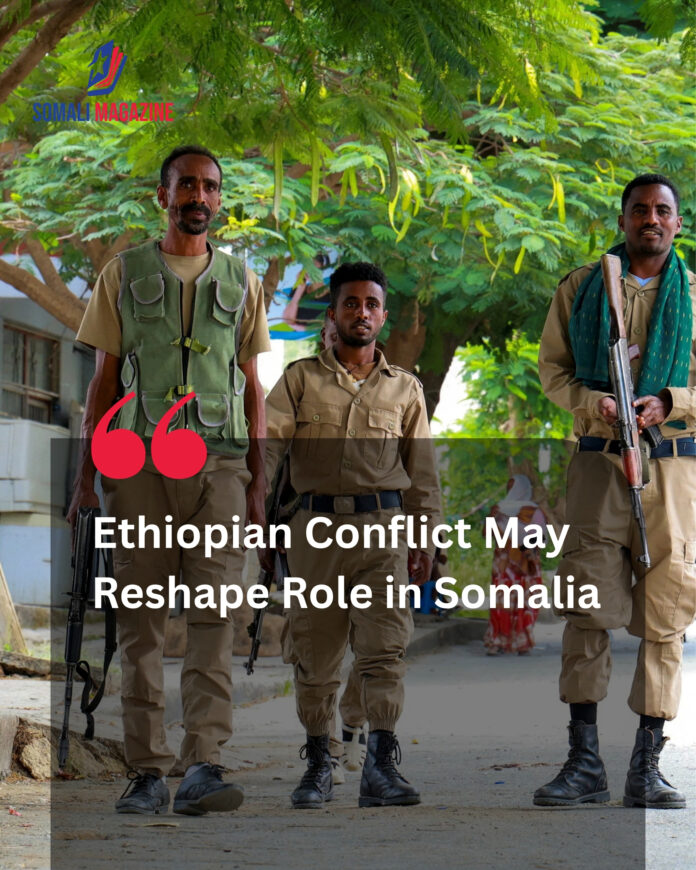
Escalating Domestic Conflict in Ethiopia Could Reshape Its Military Role in Somalia as domestic security pressures mount and force Addis Ababa to reevaluate its strategic commitments across the Horn of Africa. Recent military escalations within northern Ethiopia have strained regional peace frameworks, prompting defense analysts and international observers to closely examine how internal instability might alter the deployment of Ethiopian forces stationed abroad. With federal authorities managing simultaneous security challenges on multiple domestic fronts, the future posture of regional peacekeeping and bilateral defense cooperation faces critical adjustments.
For years, Ethiopian troops have played a substantial role in maintaining frontline stability in southern and central regions of Somalia, operating independently as well as through multinational transition missions to counter extremist threats. However, recent reports indicate that the resurgence of internal armed conflict is forcing military planners to prioritize domestic defense requirements. This internal shift has introduced new uncertainties into regional security arrangements at a time when Somali security forces are steadily stepping up to assume independent operational control of regional bases.
Defense experts note that any significant repositioning or reduction of external military personnel could create transitional security vacuums if local forces are not adequately supported by rapid logistical reinforcements. Regional administrations and international partners have emphasized the importance of maintaining robust coordination to prevent militant groups from exploiting shifting defense footprints. Maintaining stable border corridors and protecting critical supply routes remain paramount concerns for neighboring governments invested in a secure and resilient East African trade network.
As diplomatic channels remain active between Mogadishu, Addis Ababa, and key regional capitals, leaders continue to assess the broader geopolitical implications of these unfolding developments. Balancing internal security stabilization with long-term regional defense commitments will require careful multilateral coordination and sustained trust among partner nations. Until comprehensive stability is firmly established across all participating states, the evolution of cross-border military cooperation will remain a central focus for policymakers navigating the Horn of Africa’s complex security landscape.