
Facebook

Twitter (X)

Instagram

Somali Magazine - People's Magazine
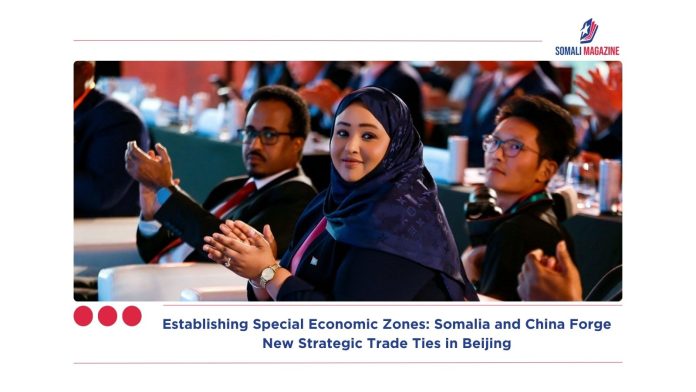
Special economic zones are taking center stage as Somali and Chinese corporate and governmental delegates gather in Beijing to negotiate transformative frameworks for long-term manufacturing growth. Convening at a high-level industrialization forum hosted by the embassy of the Federal Republic of Somalia, the diplomatic assembly drew over three hundred prominent international participants, business leaders, and representatives from various chambers of commerce. The timing of the strategic summit deliberately coincided with historic celebrations commemorating the sixty-sixth anniversary of national independence, underscoring the deep symbolic and practical value of modern industrial infrastructure to state sovereignty. A key thematic element steering the roundtable sessions centered on the unilateral zero-tariff policy introduced by the world’s second-largest economy, which grants complete duty-free access across all categories to products originating from eligible African partner nations. Central planners from both regions view the recent trade policy adjustments as a crucial framework to establish robust bilateral trade relations.
Somalia’s Ambassador to China, Dr. Hodan Osman Abdi, pointed out that this structural elimination of import duties presents clear expansion channels for domestic producers. By offering direct entry into an expansive consumer ecosystem of more than one billion individuals, ordinary local enterprises and farmers can progressively pivot away from exporting simple raw components toward processing higher-value commodities. The nation’s immense economic geography, characterized by Africa’s longest continental coastline and vast maritime jurisdictions, is uniquely suited to capture the enormous foreign demand for high-quality seafood items, particularly tuna and lobster exports. Furthermore, key economic actors indicate that sectors like agriculture, livestock management, and renewable energy grids are being aggressively marketed to global corporate networks seeking safe and profitable investment opportunities.
To systematically implement this vision, the federal ministry of commerce has prioritized an ambitious domestic industrialization agenda focused on reducing dependency on international imports. State representatives are actively inviting Chinese construction enterprises and technology consortia to finance primary logistics infrastructure, which remains an absolute prerequisite for global trade integration. Prominent engineering leaders at the event showcased upcoming municipal blueprints under the National Transformation Plan, including the flagship New Mogadishu Development Project and the specialized Hobyo Port project, designed to augment regional shipping capacity, enhance logistics connectivity, and expand cold-chain storage. As side-line business-to-business networking sessions conclude, technical panels have begun detailing regulatory measures to align strict international quality control and sanitary protocols. This collaborative commercial momentum reflects a shared regional resolve to transition from emergency aid patterns into a sustainable economic ecosystem built upon productive mutual investment. Total bilateral trade reached over one billion dollars last year, providing a resilient baseline from which both nations plan to scale future joint commercial ventures.