
Facebook

Twitter (X)

Instagram

Somali Magazine - People's Magazine
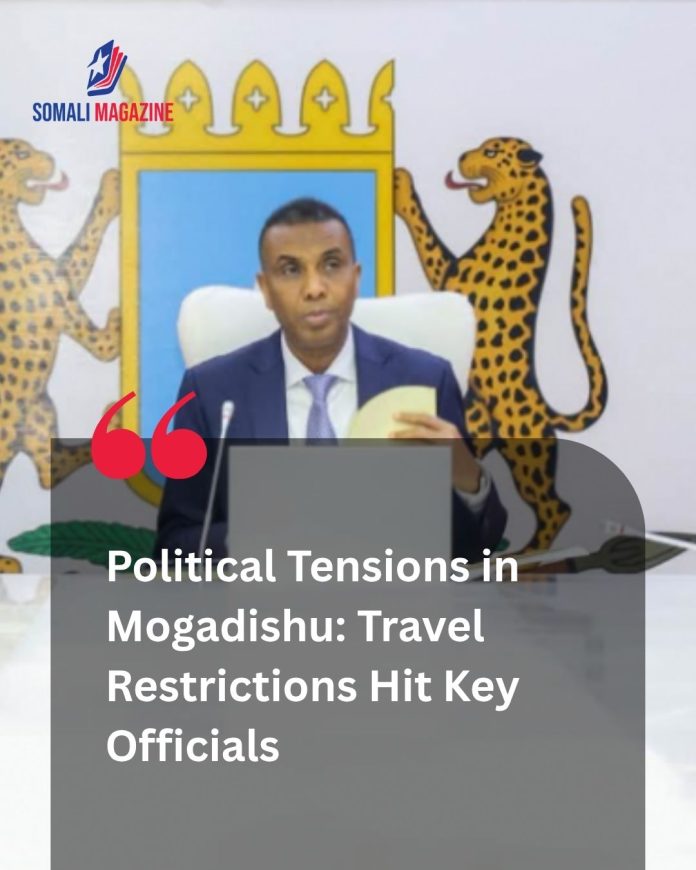
Administrative scrutiny inside the federal government has intensified in Mogadishu as several senior Somali officials face travel restrictions amid political tensions surrounding domestic governance and diplomatic protocols. Sources close to the executive branch report that administrative measures and heightened departure clearance procedures have been instituted at key transit points, notably Aden Adde International Airport. While official government spokespersons have not published a comprehensive public decree, security personnel and civil aviation contacts indicate that specific high-ranking aides and administrative directors close to President Hassan Sheikh Mohamud are currently subject to administrative review before embarking on international journeys. These developments follow recent internal directives aimed at curbing unauthorized travel, reviewing delegation manifests, and strengthening oversight within the executive office.
The reported movement restrictions come in the wake of heightened scrutiny regarding foreign travel management and delegation composition within the Villa Somalia administration. Over recent months, political commentators and diplomatic partners have expressed concerns over administrative inconsistencies, delegation oversight, and compliance with official travel protocols. According to regional reporting and institutional sources, federal authorities are moving to tighten internal accountability measures to ensure that all official departures strictly align with state priorities. While some government allies characterize the actions as routine administrative enforcement aimed at enhancing institutional discipline, independent analysts suggest the measures reflect broader efforts to manage internal friction and prevent administrative overreach during a delicate political period.
Divergent perspectives have emerged across Mogadishu regarding the legal basis and scope of the reported measures. Legal observers emphasize that under Somalia’s constitutional framework, freedom of movement remains a protected right, requiring formal judicial orders or explicit statutory authorization for any official travel suspension. However, institutional insiders clarify that executive offices maintain administrative prerogatives regarding official passports, exit authorizations, and state delegation approvals. As news circulates that key Somali officials face travel restrictions amid political tensions, political analysts note that such internal reviews are frequently utilized during sensitive political alignments to maintain operational order, safeguard official procedures, and address administrative vulnerabilities within government ministries.
The unfolding situation highlights the delicate balance between maintaining administrative accountability and navigating complex political dynamics within the federal government. Foreign diplomatic missions and international development partners continue to monitor internal governance developments closely, urging Somali leadership to uphold institutional transparency and rule-of-law standards. As security protocols at major exit ports remain active, civil society leaders emphasize the importance of clear communication from state institutions to prevent speculation and maintain public trust. Whether these administrative reviews lead to broader structural reforms or remain targeted executive measures, the situation underscores ongoing efforts to stabilize internal governance procedures while addressing political disputes in Mogadishu.