
Facebook

Twitter (X)

Instagram

Somali Magazine - People's Magazine
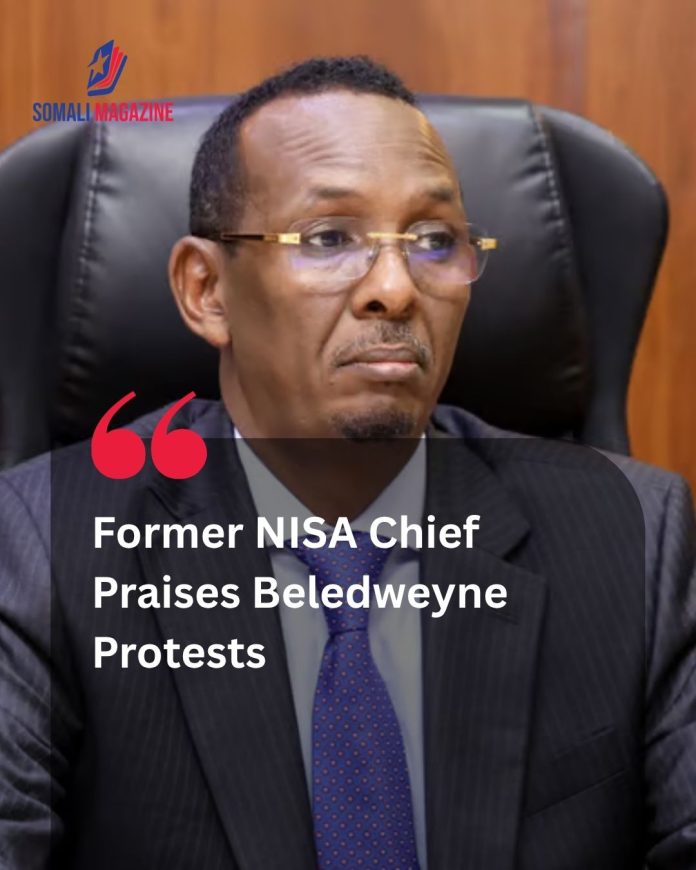
Former NISA chief praises Beledweyne protest against Hirshabelle election plan, highlighting a growing wave of civic discontent over upcoming regional polls in Somalia. Abdullahi Mohamed Ali Sanbaloolshe, the former head of the National Intelligence and Security Agency, publicly commended the hundreds of local residents, traditional elders, women, and youth who took to the streets in Beledweyne. The demonstrations were organized to oppose the scheduled regional elections, with participants arguing that the electoral process lacks the necessary local consensus and broader political agreement required for fair representation.
Addressing the public turnout, Sanbaloolshe emphasized that peaceful resistance against perceived injustice reflects both a moral and civic duty. He noted that the demonstrators successfully ensured their grievances reached national and international audiences. The protests follow extensive consultations among local politicians and traditional leaders from the Hawadle community, who have voiced strong opposition to holding elections in the Hiiraan region without a formal preliminary power-sharing agreement. Critics of the current roadmap argue that pushing forward with the vote risks deepening political fragmentation within the Hirshabelle state.
Federal lawmakers and former regional officials who addressed the crowds in Beledweyne echoed these concerns, calling for a pause in the electoral timeline until all stakeholders can negotiate an inclusive framework. The tension has been further exacerbated by disputes over executive leadership nominations and the distribution of administrative authority between Hiiraan and Middle Shabelle. Community leaders maintain that sustainable governance cannot be imposed without incorporating the direct consent of the local population.
As political maneuvering continues ahead of the scheduled polling dates, regional stakeholders remain divided on the path forward. Observers note that the situation in Beledweyne underscores broader structural challenges facing Somalia’s federal system, particularly regarding how regional administrations are formed and legitimized. For now, local leaders and residents are urging federal authorities to heed their calls for dialogue, emphasizing that lasting stability depends heavily on inclusive political reconciliation and mutual respect among constituent communities.