
Facebook

Twitter (X)

Instagram

Somali Magazine - People's Magazine
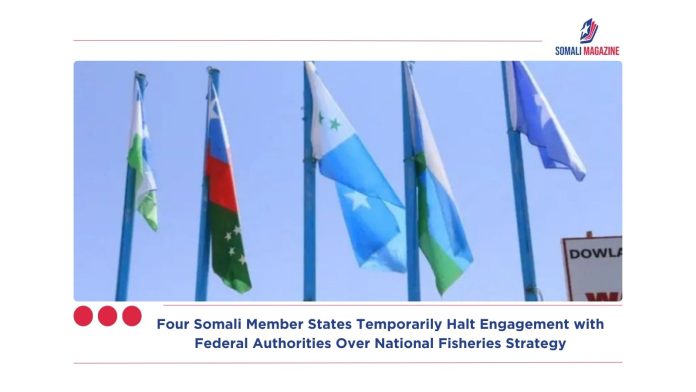
Four prominent Somali regional states have formally suspended their participation in drafting the highly anticipated National Fisheries Stock Assessment Strategy, exposing a widening administrative rift over how the country’s vast marine resources should be managed. In an unexpected joint policy announcement issued on Tuesday, the directors general of the ministries of fisheries for Hirshabelle, South West, Jubaland, and Galmudug stated that they were cutting ties with the federal process due to a critical lack of meaningful, localized consultation. The multi-state coalition explicitly accused federal authorities in Mogadishu of trying to rush through sweeping regulatory frameworks without integrating the vital input, localized expertise, and unique economic realities of the subnational administrations that are directly tasked with executing the policies on the ground.
The dramatic walkout unfolded during a formal stakeholder validation meeting, where regional directors general jointly requested an immediate postponement of the legislative session to properly introduce new, community-focused agenda items that reflected regional recommendations. According to regional officials, federal planners summarily rejected the request and chose to continue the proceedings regardless, forcing the state delegates to abruptly exit the conference in protest. Signatories of the joint defiance—including Amin Muktar Ahmed of Hirshabelle, Salmo Mahmoud Ali of the Southwest, Mahmoud Abdi Ahmed of Jubaland, and Hassan Abdullahi Omar of Galmudug—reiterated that while they fully support the overarching concept of establishing structural, nationwide resource governance, they refuse to accept a top-down model that bypasses legitimate local authorities.
The widening administrative dispute highlights a broader constitutional challenge regarding central oversight versus subnational economic autonomy within the federal system. Legal experts observe that because local coastal communities rely heavily on artisanal fishing for food security and employment, any attempt to implement centralized stock-assessment rules without deep regional backing risks creating a compliance vacuum. Maritime analysts warn that persistent jurisdictional friction between the central capital and coastal states undermines broader domestic efforts to police territorial waters and combat the multi-million-dollar threat of illegal, unreported, and unregulated foreign fishing. While federal ministry spokespeople have yet to publish an official response to the walkout, the highly unified stance of the four territories ensures that the implementation of the National Fisheries Stock Assessment Strategy will remain completely stalled until comprehensive, round-table consensus is achieved.