
Facebook

Twitter (X)

Instagram

Somali Magazine - People's Magazine
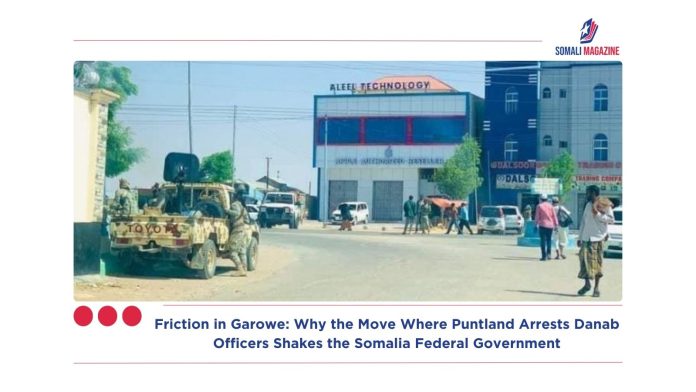
The unfolding situation where Puntland arrests Danab officers highlights an escalating crisis between regional security apparatuses and the broader Somalia federal government framework. According to local officials and regional reports emerging from Garowe, the semi-autonomous state took the unexpected step of detaining two members of the elite, United States-trained Danab Advanced Infantry Brigade. While full operational details surrounding the detentions remain fluid, early reports indicate that the individuals were intercepted during an unauthorized movement within regional territory. This bold administrative action by the state leadership comes amid a prolonged constitutional dispute regarding the division of powers, electoral systems, and resource management between the regional hub and the national capital of Mogadishu. The local government has frequently expressed grievances over what it characterizes as federal encroachment into state security affairs and political processes.
The targeted incident marks an unprecedented escalation in friction over command structures and territorial oversight. Observers note that elite military units like Danab typically operate under a unified national strategy focused on counter-terrorism efforts against militant factions such as al-Shabaab. However, when Puntland arrests Danab officers under allegations of non-coordination, it exposes deep fractures within the national security architecture. Experts suggest that without formalized, mutually respected agreements on troop movements, regional states may increasingly treat federal assets as unauthorized actors within their borders. In response to the growing operational impasse, community leaders and regional elders have reportedly called for restraint, urging both administrations to prevent localized security disputes from spiraling into broader armed confrontations that could undermine regional stability.
This security rift is deeply intertwined with a broader constitutional dispute that has paralyzed institutional cooperation for months. Tensions significantly worsened after the national parliament advanced sweeping revisions to the provisional framework, leading the state administration to formally suspend cooperation with central authorities. The detention of federal personnel serves as a tangible manifestation of this political alienation, emphasizing the severe breakdown in communication channels between Garowe regional security officials and national defense planners. Central authorities in Mogadishu have not yet released an official comprehensive statement clarifying their stance on the matter, but preliminary updates from federal police lines indicate deep concern over the safety of the detained personnel and the potential disruption of vital counter-terrorism operations.
As stakeholders closely monitor the unfolding standoff, the international community has consistently emphasized the necessity of dialogue to resolve administrative stalemates. The long-term implications of these arrests could heavily impact ongoing collaborative security programs and international funding for elite military units. Without a definitive diplomatic resolution to the current impasse, the political distance between the state and central systems risks becoming permanently entrenched, complicating future security integration. Ground-level updates indicate that while Garowe regional security remains heightened, active mediation efforts are being explored to defuse immediate tensions and secure an orderly channel for administrative review.