
Facebook

Twitter (X)

Instagram

Somali Magazine - People's Magazine
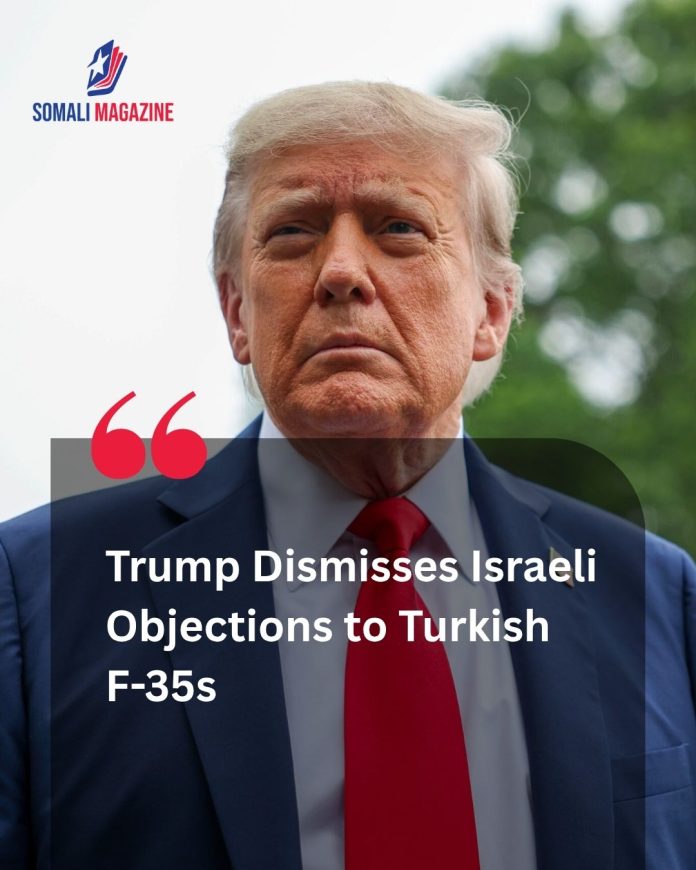
Tensions between allied capitals have surfaced in global diplomacy after Trump dismisses Netanyahu’s objections over potential F-35 jet sale to Türkiye during candid remarks delivered to reporters aboard Air Force One. Speaking during transit from Washington to Michigan, the American president firmly rejected the notion that external partners could dictate United States defense export policy. Highlighting his personal relationship with Turkish President Recep Tayyip Erdoğan, the chief executive characterized Ankara as a vital strategic ally with a powerful military apparatus that has managed regional security challenges effectively. The blunt public statement directly countered public warnings from Israeli Prime Minister Benjamin Netanyahu, who previously argued that restoring Ankara’s access to fifth-generation stealth fighters would disrupt the regional balance of power. While acknowledging existing friction between Ankara and West Jerusalem, presidential officials underscored Washington’s commitment to maintaining independent bilateral trade relationships across the Middle East.
The public disagreement follows diplomatic momentum built during a recent NATO gathering, where executive discussions signaled a willingness to re-examine defense restrictions imposed on Ankara. Türkiye was originally suspended from the joint strike fighter initiative in 2019 following its acquisition of the Russian S-400 air defense platform. Turkish leadership has consistently maintained that the defense systems operate independently without compromising allied technology. Following preliminary executive assurances regarding the potential removal of CAATSA sanctions, Israeli leadership voiced immediate opposition, emphasizing the necessity of protecting Israel’s qualitative military edge across regional airspaces. However, presidential advisors reiterated that defense export decisions ultimately rest with the executive branch in Washington.
Despite the strong executive rhetoric, foreign policy analysts note that any formal defense transaction faces institutional procedures within the United States legislature. Congressional oversight committees continue to review statutory certification requirements, particularly regarding the status of foreign air defense hardware and long-term security guarantees. Recent legislative communications from the State Department indicate that while diplomatic dialogues remain open, specific regulatory conditions linked to the 2019 suspension must be formally resolved before deliveries can proceed. Turkish defense officials maintain that fulfilling original program commitments remains an important step toward strengthening collective NATO defense capabilities.
The public exchange highlights complex geopolitical dynamics among key partners across Europe and the Middle East. As diplomatic channels between Washington, Ankara, and West Jerusalem continue to engage on regional security, international observers are closely watching how defense trade policies align with broader alliance commitments. Strategic analysts maintain that navigating these defense relationships will remain crucial for regional stability, sovereign defense planning, and international security cooperation.