
Facebook

Twitter (X)

Instagram

Somali Magazine - People's Magazine
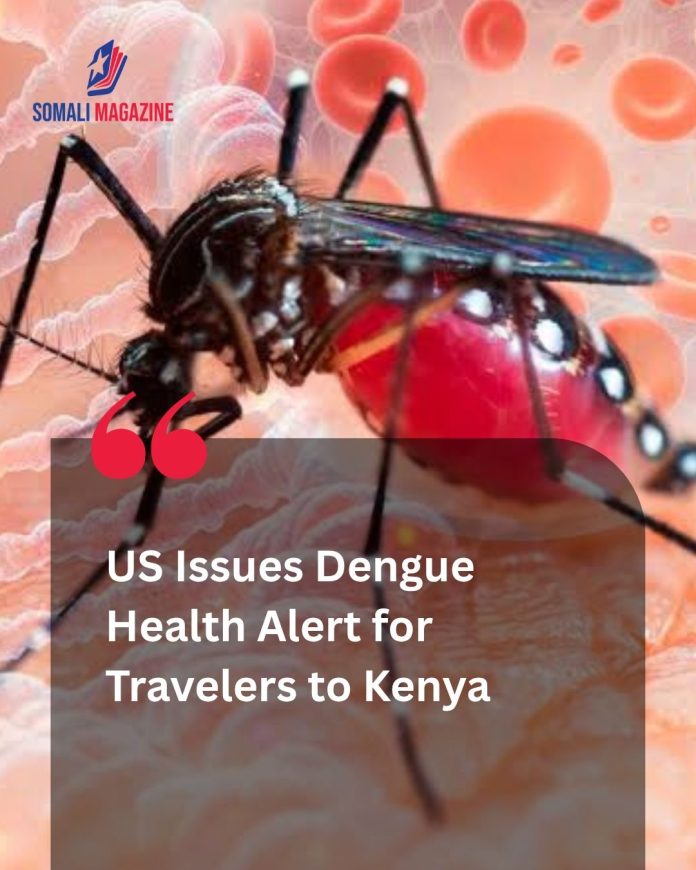
The US issues dengue travel alert for Kenya as health officials monitor an upward trend in vector-borne viral infections across several key regions. In an official travel health notice distributed via the United States Embassy in Nairobi, the US Centers for Disease Control and Prevention identified elevated transmission rates of dengue fever. The global health surveillance update highlights increased risk specifically within Kenya’s coastal destinations as well as the northeastern counties of Wajir and Garissa, which sit along vital transit corridors linking East Africa and the Horn.
While public health agencies maintain Kenya under a Level One travel notice—advising standard precautions rather than travel restrictions—the alert emphasizes the importance of preventive measures against mosquito bites. Dengue fever, a viral infection transmitted primarily by daytime-active Aedes aegypti mosquitoes, typically causes high fevers, severe muscle and joint aches, severe headaches, nausea, and skin rashes. Medical practitioners emphasize that while most cases resolve after standard care, severe manifestations can emerge without early diagnostic intervention and adequate fluid management.
Epidemiological patterns indicate that rising temperatures, rapid urban expansion, and erratic seasonal rainfall across East Africa have created optimal breeding environments for vector populations. Health analysts observe that outbreaks in northeastern Kenya, including Garissa and Wajir counties, carry significant regional relevance due to frequent cross-border movements, livestock commerce, and familial ties connecting local communities with regional trade hubs. Public health bodies urge residents and incoming visitors to take active precautions, including applying registered insect repellents, wearing protective long-sleeved clothing, and utilizing screened or air-conditioned accommodations.
The advisory comes at a moment of heightened international and regional travel across Kenya. Local public health authorities are intensifying vector control measures and surveillance efforts in affected urban and rural districts. Officials continue to encourage individuals exhibiting sudden fever symptoms to seek prompt medical assessment at local clinical facilities to ensure effective tracking and symptom management.