
Facebook

Twitter (X)

Instagram

Somali Magazine - People's Magazine
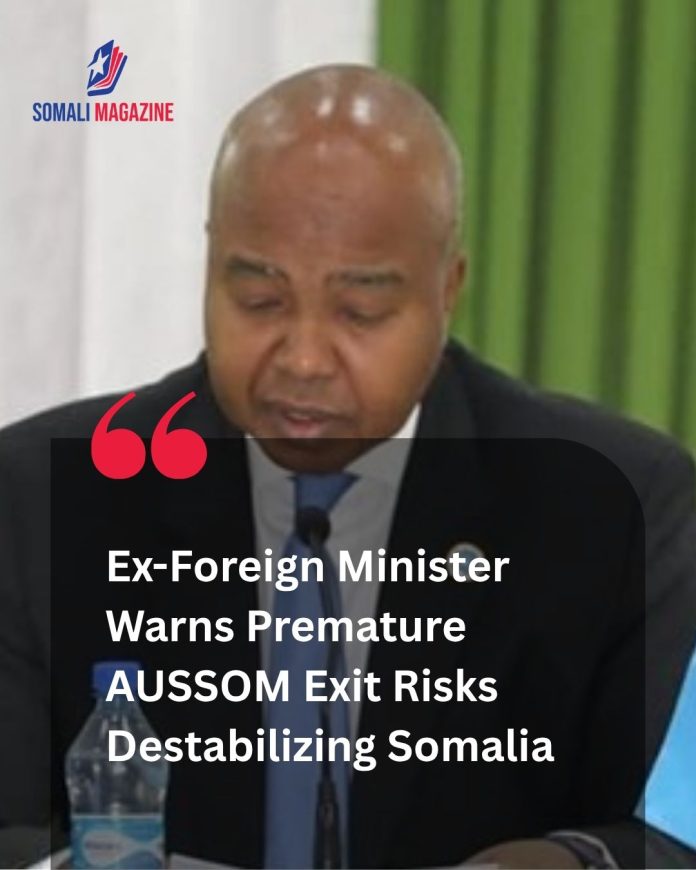
Addressing growing diplomatic anxiety over peacekeeping transition timelines across the Horn of Africa, a former Somali foreign minister warns AUSSOM withdrawal could destabilize Somalia if international partners force a premature drawdown before national defense forces reach self-sustaining operational readiness. Senior political figures and diplomatic analysts have voiced urgent concerns regarding the planned security handover from the African Union Support and Stabilization Mission in Somalia to federal defense institutions. Official statements from veteran diplomats emphasize that removing foreign peacekeeping contingents without establishing robust, fully equipped local garrisons could create dangerous security voids across key regional sectors.
The warning comes at a delicate operational juncture as the Federal Government of Somalia balances front-line counterterrorism operations against al-Shabaab insurgents with a complex multilateral security transition. Under international security frameworks, peacekeeping units are slated to gradually hand over territorial responsibility to the Somali National Army. However, regional security experts argue that logistics, equipment shortfalls, and command coordination challenges continue to hinder rapid force deployment in newly liberated territories. Former diplomatic officials stress that any uncoordinated exit strategy could undo hard-won tactical gains achieved over years of joint military campaigns.
Controversy surrounding the mission transition has been further complicated by broader geopolitical realignments within East Africa. Debates regarding which partner nations will contribute troops to the new mission architecture have drawn intense scrutiny from regional governments. Political observers point out that maintaining consensus among troop-contributing countries is vital for sustaining intelligence sharing and operational cohesion. Former foreign ministry leadership warned that geopolitical rivalries between neighboring states risk fragmenting the multilateral defense framework, potentially leaving critical urban centers vulnerable to renewed insurgent counteroffensives.
As a former Somali foreign minister warns AUSSOM withdrawal could destabilize Somalia, federal authorities in Mogadishu maintain that national forces are steadily building the structural capacity needed to assume full security oversight. Government spokespersons highlight recent military recruitment drives and specialized training programs as evidence of institutional progress. Nevertheless, international defense partners continue to urge a benchmark-driven transition schedule rather than rigid calendar deadlines, arguing that security conditions on the ground must dictate the pace of troop departures.
Ultimately, the debate underscores the profound security challenges facing Somalia as it seeks to consolidate national sovereignty while safeguarding domestic peace. Experts emphasize that building a resilient, unified national army requires sustained financial support, standardized training pipelines, and cohesive political alignment between federal and regional leadership. Ensuring a synchronized, conditions-based transition remains the primary prerequisite for preventing security vacuums, protecting civilian populations, and securing long-term regional stability.