
Facebook

Twitter (X)

Instagram

Somali Magazine - People's Magazine
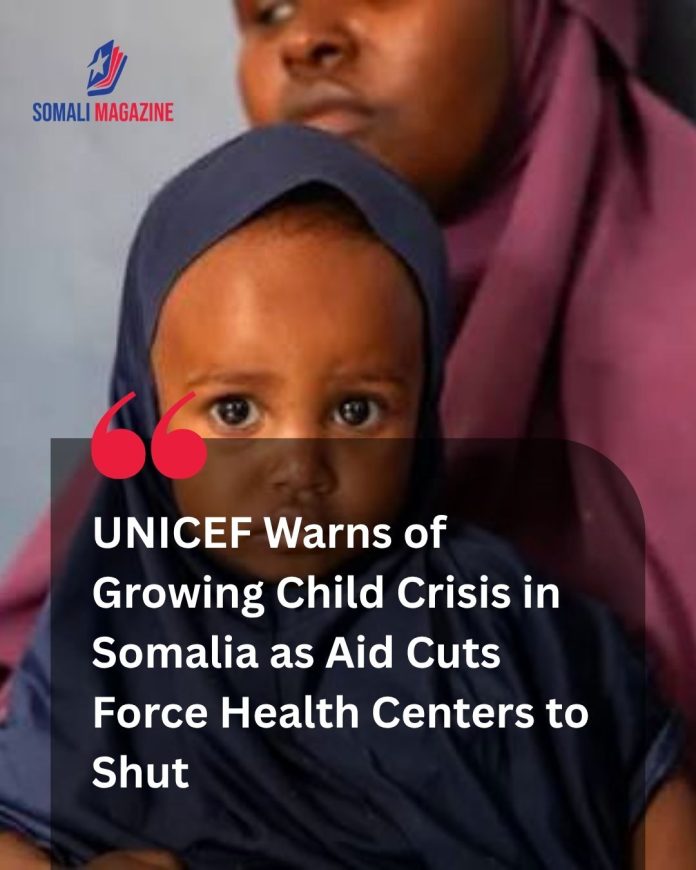
Worsening humanitarian conditions have reached a critical threshold across the Horn of Africa after hundreds of health and nutrition facilities closed as Somalia’s child crisis deepens following unprecedented reductions in international aid funding. Briefing reporters at the United Nations in Geneva, UNICEF spokesperson James Elder warned that at least 205 essential healthcare and nutrition centers have already ceased operations nationwide. The sudden shuttering of these localized medical posts has forced vulnerable families in rural and displaced communities to travel significantly longer distances to seek basic medical attention. Aid agencies report that delayed access to medical intervention routinely converts manageable ailments into life-threatening emergencies for young children suffering from preventable illnesses.
The immediate consequences of these institutional closures are already visible across regional medical infrastructure. Official UN data indicates a 32 percent surge in pediatric admissions to specialized stabilization centers for severe acute malnutrition with medical complications during the first six months of the year. Humanitarian analysts emphasize that this spike does not simply reflect an sudden increase in sick children, but rather highlights the collapse of community-based preventive care. With early screening programs suspended and localized treatment outposts dark, severely malnourished infants are only reaching hospitals when their health has deteriorated to extreme conditions. Under severe financial modeling, aid organizations project that up to 618 health centers could shut down if funding shortfalls persist.
The compounding healthcare breakdown coincides with severe environmental and economic pressures across the country. Prolonged drought conditions across northern regions have destroyed livestock herds and agricultural harvests, forcing thousands of pastoralist families into makeshift displacement camps near urban centers. Meanwhile, global economic shocks and rising fuel costs have quadrupled water prices in rural areas, severely restricting access to safe drinking water and essential hygiene supplies. These compounding factors are accelerating disease outbreaks while simultaneously crippling community resilience. Nearly 1.9 million children are projected to suffer from acute malnutrition this year, including nearly 500,000 facing severe acute malnutrition—the most lethal form of hunger.
In addition to direct medical impacts, critical logistical support and child protection networks are facing catastrophic cutbacks. Major budget reductions have hit the United Nations Humanitarian Air Service, jeopardizing the supply lines required to transport medicine, therapeutic food, and emergency relief staff to remote districts. Over 65 child protection facilities have closed, leaving case management and reintegration programs vulnerable. Furthermore, deep cuts in education funding have caused tens of thousands of children to drop out of school. UN officials continue calling on international donors to restore essential humanitarian funding, warning that dismantling lifesaving health networks during a deepening drought will lead to irreparable loss of human life.