
Facebook

Twitter (X)

Instagram

Somali Magazine - People's Magazine
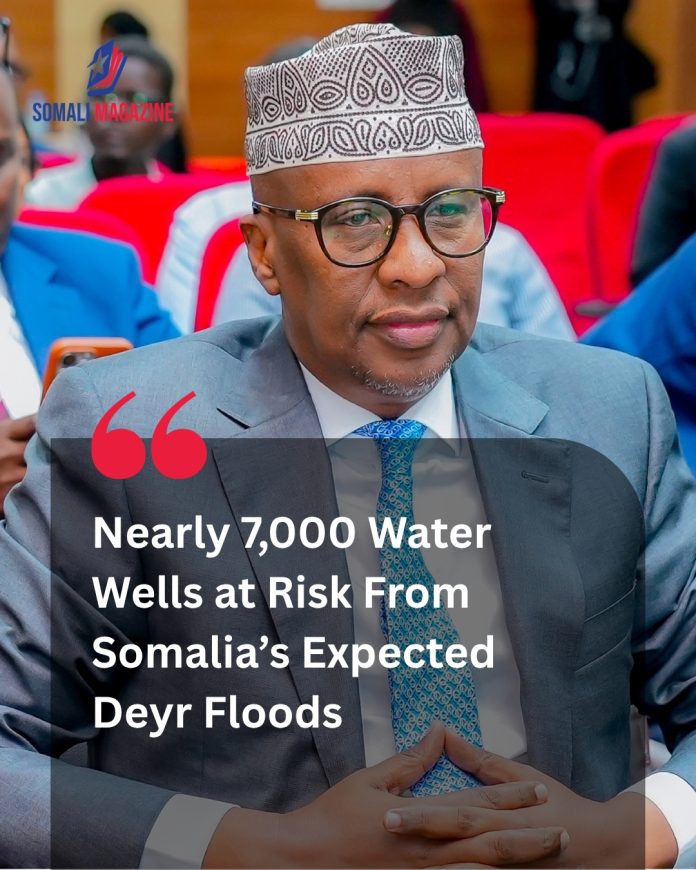
Nearly 7,000 water wells at risk from Somalia’s expected Deyr floods located along vulnerable riverbanks across the country, threatening vital rural water access as the upcoming rainy season approaches. Minister of Energy and Water Resources Abdullahi Bidhan issued an urgent public warning, highlighting that thousands of crucial boreholes face imminent submersion or heavy silt accumulation as river levels rise. Officials emphasized that once these critical water points become choked with mud or submerged under overflowing torrents, restoring them to operational status presents a severe technical and financial challenge.
The looming hydrological threat is driven by forecasted Super El Niño weather conditions that are expected to bring intense precipitation throughout the October-to-December Deyr season. Hydrological experts warn that heavy downpours in both domestic catchment areas and the neighboring Ethiopian highlands will significantly swell regional waterways, putting extensive pressure on riverine infrastructure. Beyond the immediate danger of flood inundation, the contamination of water sources risks triggering widespread public health crises and exacerbating food security vulnerabilities in communities that depend heavily on these supplies.
Government ministries and disaster management agencies are currently coordinating preemptive measures to safeguard community water points and establish alternative distribution networks before heavy weather strikes. Authorities noted that the crisis highlights the country’s profound exposure to extreme climate volatility, swinging rapidly between severe drought pressures and destructive flooding events. While proactive planning remains critical, officials stressed that long-term investments in resilient water engineering are essential to protect foundational infrastructure from recurring climate shocks.
As regional administrations review emergency response frameworks, community leaders are urged to monitor official meteorological alerts and assist in securing local water installations. The Ministry of Energy and Water Resources continues to work alongside international humanitarian partners to pre-position repair equipment and emergency purification supplies across high-risk districts. Safeguarding these essential water sources remains a top priority for preventing large-scale population displacement and ensuring the sustained well-being of families residing along vulnerable river corridors.