Facebook

Twitter (X)

Instagram

Somali Magazine - People's Magazine
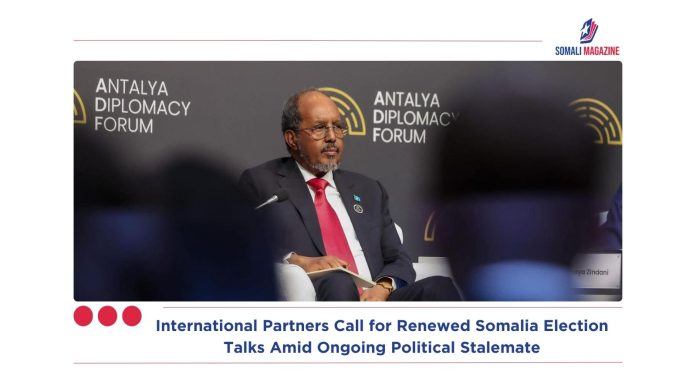
International partners have urged Somali leaders to return to the negotiating table to resume Somalia election talks, citing concerns over prolonged political uncertainty and stalled progress on key electoral issues. The appeal reflects growing international attention on the need for consensus-driven solutions to ongoing disputes.
According to statements attributed to diplomatic stakeholders, the call for renewed dialogue emphasizes the importance of inclusive engagement among federal and regional leaders. While specific parties were not publicly named, the appeal aligns with previous efforts by international actors to support Somalia political dialogue election dispute resolution processes.
Early reports suggest that disagreements over electoral frameworks, timelines, and governance structures have contributed to the current impasse. Analysts note that electoral process Somalia negotiations have historically required extensive coordination between multiple stakeholders, including federal authorities, regional administrations, and political groups.
Officials from the Federal Government of Somalia have not issued a detailed response to the latest calls, and it remains unclear whether formal talks are scheduled to resume. Observers say that while public statements from international partners can signal urgency, their impact often depends on domestic political will.
The international partners Somalia elections involvement typically includes support from multilateral organizations and foreign governments seeking to promote stability and democratic governance. These actors often encourage dialogue as a means to avoid escalation and maintain institutional continuity.
Experts emphasize that Somalia governance stability is closely linked to the credibility and inclusiveness of its electoral processes. They caution that prolonged delays or unresolved disputes could affect public confidence and complicate broader state-building efforts.
At the same time, analysts note that election-related negotiations in Somalia are often complex and influenced by competing political interests. Achieving agreement may require compromise on sensitive issues, including representation, power-sharing, and legal frameworks.
While the call to resume Somalia election talks underscores the importance of dialogue, no concrete timeline or mechanism for renewed discussions has been confirmed. Observers say that developments in the coming weeks will be critical in determining whether momentum can be regained.
As the situation evolves, stakeholders are expected to continue engaging through both formal and informal channels, with the aim of advancing a negotiated path forward for Somalia’s electoral process.