
Facebook

Twitter (X)

Instagram

Somali Magazine - People's Magazine
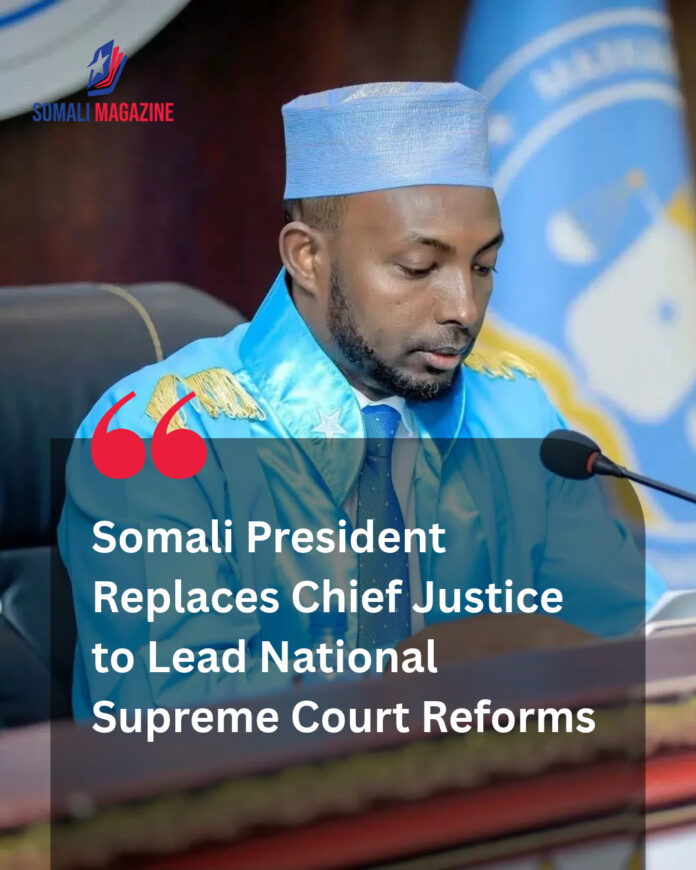
In a major institutional shift, the Somali president replaces the Chief Justice, citing complaints from judges, judicial personnel, and legal professionals seeking structural reforms across the national court system. President Hassan Sheikh Mohamud formally issued an executive decree removing Baashe Yusuf Ahmed from his post as head of the Supreme Court and reappointing former Chief Justice Ibrahim Idle Suleiman to lead the judiciary. Official statements issued by Villa Somalia highlighted that the judicial transition is designed to restore administrative confidence, safeguard judicial independence, and establish a transparent justice framework for Somali citizens.
The unexpected administrative reshuffle follows reported grievances from legal practitioners regarding internal court administration and institutional transparency. The presidency noted that incoming Chief Justice Ibrahim Idle Suleiman, who previously served in the position prior to his replacement in 2018, has been instructed to prioritize comprehensive structural reforms and enforce equal protection under the law. Former Chief Justice Baashe Yusuf Ahmed had served at the helm of the highest legal body for six years, overseeing significant transitional court developments before the executive decree brought his tenure to an abrupt close.
Political observers and legal experts note that the leadership change occurs during a delicate national period involving ongoing legislative reviews, electoral discussions, and constitutional consultations across federal member states. Some independent analysts and opposition figures contend that the timing of the dismissal correlates with sensitive constitutional petitions brought before the court, though presidential officials maintained that the decision was driven strictly by judicial management needs and public demands for court efficiency. Handover logistics and formal installation dates for the reinstated chief justice are expected to be finalized in the coming days.
As the government moves forward with the leadership transition, civil society groups and international partners continue to emphasize that a stable, impartial, and credible judiciary remains essential for long-term national security and democratic consolidation. Government representatives reaffirmed that upcoming judicial initiatives will focus on modernizing regional court branches, training magistrate personnel, and protecting the rule of law. As Somalia’s president replaces Chief Justice, citing complaints from judges, national stakeholders remain focused on whether the institutional restructuring will enhance public trust and deliver equitable judicial access across the country.