
Facebook

Twitter (X)

Instagram

Somali Magazine - People's Magazine
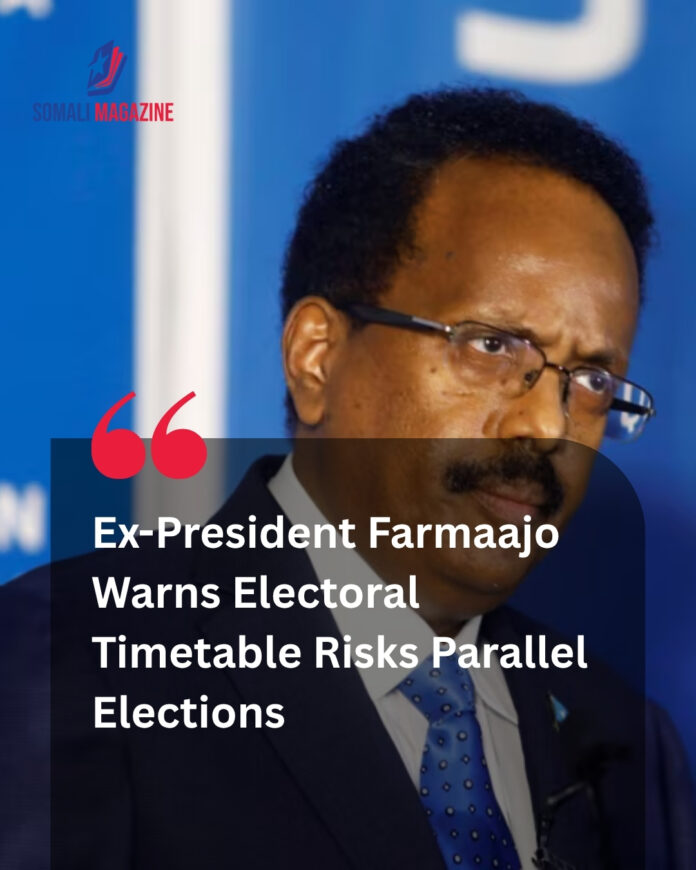
Former Somali President Mohamed Abdullahi Farmaajo warned that the federal election roadmap unveiled by the National Independent Electoral and Boundaries Commission could trigger severe political instability. In a formal public address, the ex-President warns NIEBC poll timetable risks parallel elections and conflict if federal authorities continue pursuing an electoral track without securing broad political consensus among key stakeholders. He urged federal leadership to pause unilateral electoral maneuvers and return to inclusive political dialogue to establish an agreed-upon voting model.
The warnings follow the electoral commission’s formal announcement scheduling parliamentary voting for April 15, 2027, followed by the presidential election on May 15, 2027. Former political leaders and regional member state representatives argue that introducing a direct voting system without comprehensive political agreements risks splintering national unity. Opposition groupings, including the Somali Salvation Forum, contend that proceeding without full consensus creates a dangerous precedent that could lead federal member states to organize competing elections within their respective regions.
Constitutional disputes and electoral framework debates remain central to the growing political standoff in Mogadishu. Opposition figures contend that earlier constitutional revisions were enacted without adequate consensus, raising concerns over institutional mandates and regional governance autonomy. Former national leaders emphasize that previous democratic transitions succeeded because they relied on broad-based political agreements reached between federal authorities, regional member states, and civil society representatives.
In response to the political pushback, federal government envoys maintain that the election schedule aligns strictly with established constitutional mandates and national legislation. Government representatives assert that setting firm election dates provides administrative clarity while remaining open to ongoing discussions with regional leaders and opposition figures. International diplomatic partners continue urging all political parties to maintain open channels of communication, avoid escalation, and prioritize consensus-building to safeguard national security and institutional progress.