
Facebook

Twitter (X)

Instagram

Somali Magazine - People's Magazine
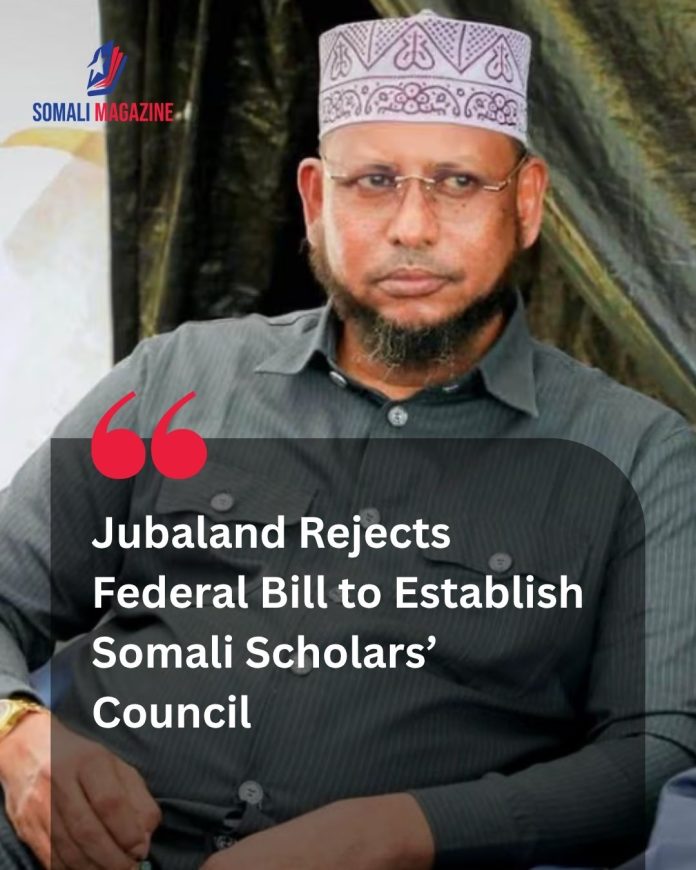
Jubaland rejects federal bill to establish Somali scholars’ council as political disagreements between Mogadishu and federal member states continue to widen over legislative jurisdiction. In an official administrative declaration issued from Kismayo, regional authorities announced their outright opposition to the newly proposed federal legislation, arguing that the draft framework lacks broad consultation and infringes upon regional governance boundaries. The regional administration’s rejection highlights deep-seated mistrust regarding how federal institutions advance religious and civic oversight policies without securing consensus from local leadership.
The disputed federal bill, initially introduced by the central government to formalize a unified national body of Islamic scholars, was designed to coordinate religious guidance and promote social cohesion nationwide. However, officials in Jubaland contended that the legislative process bypassed essential inter-governmental coordination mechanisms, rendering the proposed council unacceptable for implementation within the southern federal member state. Regional leaders stressed that any national institution intended to represent religious authorities must be established through inclusive, collaborative frameworks that adequately reflect the autonomy and inputs of all member states.
This latest pushback intensifies an already strained political relationship between Villa Somalia and regional authorities who have frequently clashed over constitutional reform, electoral timelines, and administrative centralization. Observers note that administrative disagreements over legislative initiatives often stall broader state-building efforts, complicating unified policy execution across the country. Civil society groups and legal experts have urged both sides to engage in formal dialogue to resolve ongoing structural disputes before they further fragment the country’s governance architecture.
As federal lawmakers weigh next steps regarding the contested bill, the rift underscores the complex challenges of managing a decentralized federal system in Somalia. Ensuring that national laws receive broad regional buy-in remains vital for maintaining internal stability and cooperative federalism. Regional leaders maintain that until their administrative concerns are formally addressed, any top-down legislative measures will face continued resistance at the local level.