
Facebook

Twitter (X)

Instagram

Somali Magazine - People's Magazine
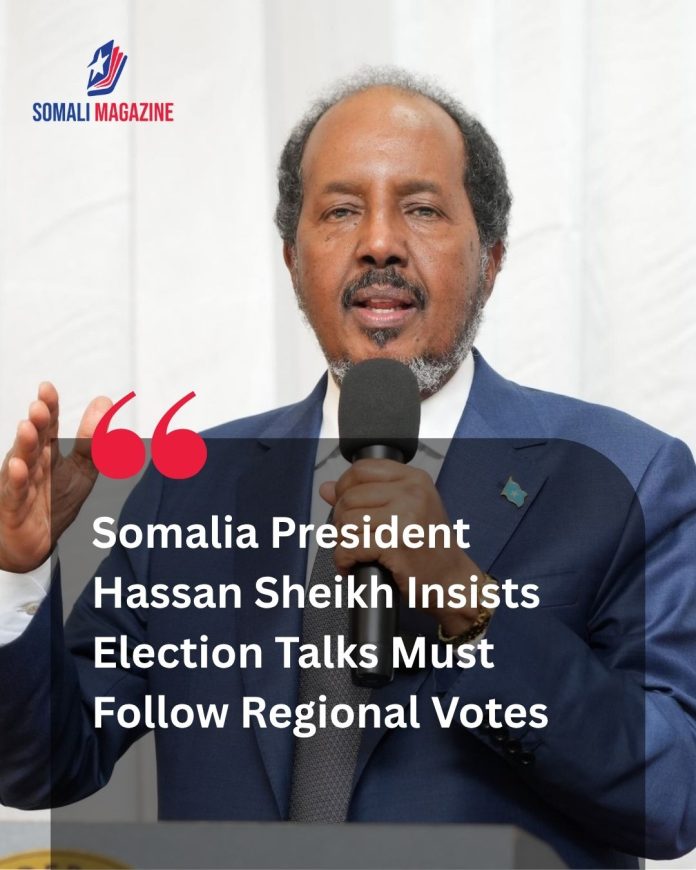
Somalia President Hassan Sheikh insists election talks must follow regional votes as political friction intensifies between the federal administration and opposition coalitions over the nation’s democratic transition roadmap. Speaking from Villa Somalia, President Hassan Sheikh Mohamud maintained that ongoing electoral reforms and sub-national polling schedules must proceed without broad structural renegotiations, emphasizing that moving away from the historic clan-based indirect model remains an absolute necessity for long-term governance. The administration’s firm stance follows weeks of delicate diplomatic facilitation led by international partners seeking to bridge deep divisions over the country’s electoral architecture.
Opposition groups, organized under coalitions like the Somali Future Council, have strongly criticized the administration’s approach, arguing that comprehensive national consensus and an independent management framework must be established before any further votes occur. Critics contend that pushing forward with regional ballots without a unified national agreement risks deepening institutional fractures across federal member states. However, the federal government asserts that delaying the structured transition toward universal suffrage would only prolong elite-dominated power-sharing arrangements that have historically hindered inclusive political participation and public accountability.
The debate centers heavily on the sequencing of institutional reforms and the operational independence of electoral bodies tasked with organizing upcoming ballots. While international mediators continue urging both sides to compromise on a mutually acceptable timeline, the presidency remains steadfast in executing its legislative framework. Analysts note that balancing federal oversight with regional political buy-in is critical as the country attempts to implement direct voting mechanisms for the first time in decades. Stakeholders across the political spectrum are under mounting pressure to find common ground to prevent further escalation.
As diplomatic efforts persist behind closed doors, regional observers emphasize that establishing transparent, credible electoral procedures is vital for preserving public confidence. The outcome of the ongoing standoff will heavily influence Somalia’s political trajectory as administrative authorities and political rivals navigate the complexities of democratic reform. Both government representatives and opposition leaders face the challenge of reconciling competing visions for the nation’s electoral future while safeguarding fragile state stability.