
Facebook

Twitter (X)

Instagram

Somali Magazine - People's Magazine
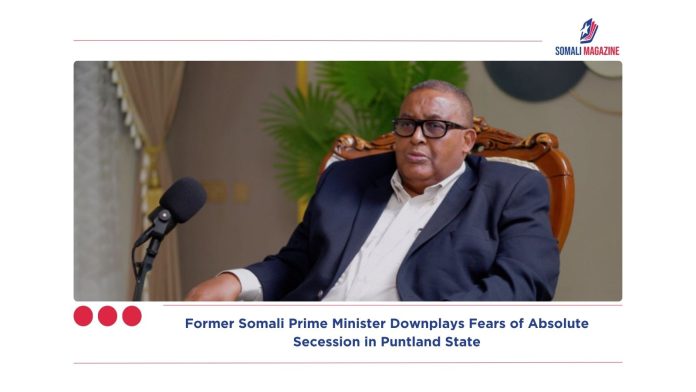
A prominent former Somali Prime Minister has publicly downplayed mounting concerns that the semi-autonomous northeastern region will permanently separate from the central government, characterizing the ongoing standoff as a political maneuver rather than a true pursuit of statehood. The strategic analysis follows a series of sharp escalations in which authorities in Garowe announced they would operate as an independent functional state until comprehensive national revisions are approved by a popular referendum. While this declaration raised widespread anxiety regarding the potential fragmentation of the nation’s sovereign boundaries, senior statesmen maintain that the state’s traditional leadership remains deeply invested in the long-term unification of the republic. Historically, the territory has championed a decentralized governance layout, utilizing its leverage to protect localized authority rather than pursuing absolute international recognition.
The current political dispute stems primarily from sweeping constitutional frameworks recently passed by the federal parliament in Mogadishu, which altered the national power-sharing structure and extended executive terms. Regional leaders vehemently argue that these changes were enacted without sufficient inclusive consultation, prompting them to withdraw formal recognition from centralized institutions. Addressing these structural fractures, the former Somali Prime Minister explained that the autonomous territory is strategically demonstrating its administrative self-reliance to force a comprehensive renegotiation of the federal compact. The region has consistently identified as a federal member state, deliberately separating its constitutional grievances from the overt secessionist trajectory observed in adjacent territories. By maintaining independent control over its ports, security architectures, and internal development plans, the local government aims to maximize its institutional bargaining power.
Furthermore, political analysts note that the local administration recently launched an ambitious multi-billion dollar five-year development plan focused on establishing decentralized economic resilience. This economic push reinforces the area’s internal governance capabilities without requiring a total break from the overarching national framework. The former Somali Prime Minister reiterated that the resolution to this enduring deadlock requires the immediate resumption of a mediated dialogue between Mogadishu and the federal member states. External security partners have similarly urged both sides to avoid escalatory legislative actions that could inadvertently jeopardize joint military campaigns against insurgent networks in rural zones. Ultimately, preserving the delicate balance of the federal model will depend on whether the central government can successfully reconcile its standardization goals with the regional autonomy demands of its foundational territories.