
Facebook

Twitter (X)

Instagram

Somali Magazine - People's Magazine
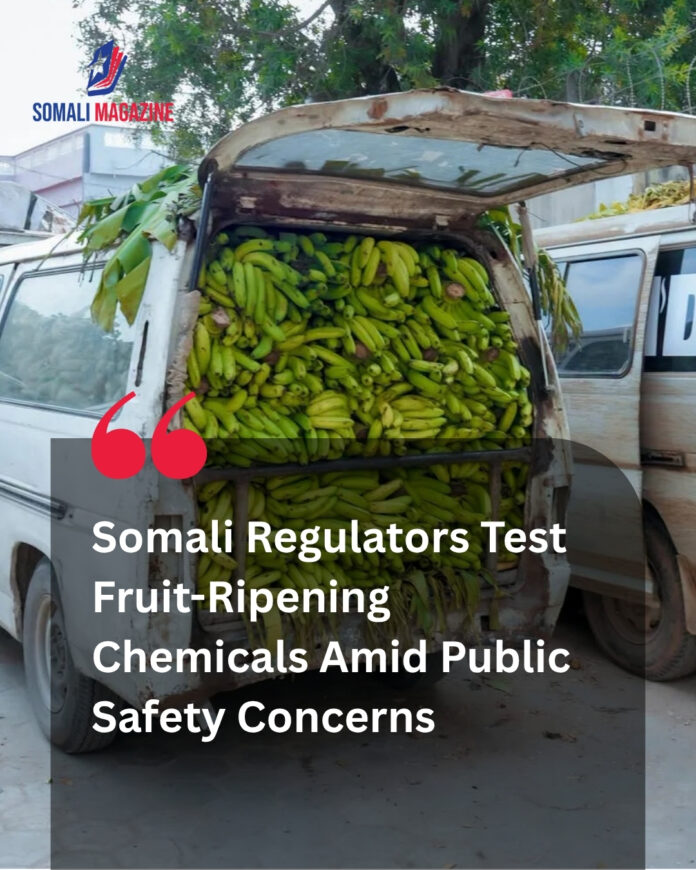
Somalia tests fruit-ripening chemicals amid safety concerns after public alarm and viral reports raised questions regarding the premature chemical ripening of bananas and other commercial produce. In response to growing consumer anxiety over potential health hazards, the Somali Agricultural Regulatory and Inspection Service, alongside the Somali Bureau of Standards, launched comprehensive market inspections and laboratory testing initiatives aimed at enforcing strict quality standards across major distribution centers. Regulatory teams recently inspected vendor operations at Mogadishu’s central Bakara vegetable market to investigate unapproved practices and verify whether commercial agents comply with established agricultural safety frameworks.
The official intervention focuses on verifying the chemical composition, dosage, and application methods of substances utilized by local traders to accelerate fruit maturity. While regulators acknowledged that controlled substances such as ethylene gas and ethephon can be safely utilized under strict temperature and dosage guidelines, officials reiterated that unregulated chemical application violates national food standards. Regulatory authorities emphasized that safeguarding consumer health remains a legal mandate, warning that unvetted substances circulating in public markets will undergo rigorous identity testing to determine their safety profile and potential toxicity.
Under Agricultural Chemicals Law No. 33 of 2024, importers, distributors, and commercial vendors must officially register all agricultural chemicals with government regulators prior to market distribution. Inspection officials cautioned that vendors utilizing uncertified ripening agents or disregarding safe dosage thresholds face immediate prosecution under statutory codes. Simultaneously, agricultural officers urged local farmers and market traders to adopt natural ripening methods and standardized post-harvest handling procedures to maintain produce quality without relying on questionable chemical accelerants.
Civil society groups and public health advocates welcomed the regulatory action, noting that transparent chemical testing and market monitoring are vital for restoring consumer trust in local produce supply chains. Authorities have called upon citizens to report suspicious produce to inspection teams as field monitoring continues across urban markets. As Somalia tests fruit-ripening chemicals amid safety concerns, national food safety agencies remain committed to enforcing rigorous compliance standards, protecting public health, and establishing accountable agricultural practices across the country.