
Facebook

Twitter (X)

Instagram

Somali Magazine - People's Magazine
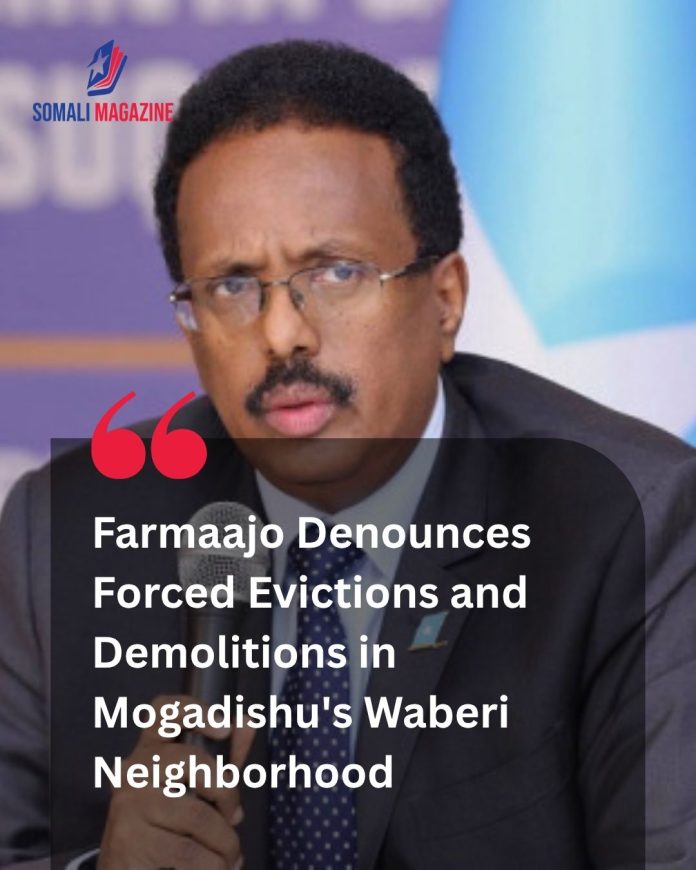
Highlighting growing political opposition to forced urban clearances, former President Mohamed Abdullahi Farmaajo condemns evictions and demolitions in Mogadishu’s Waberi District as federal and municipal authorities continue public land reclamation campaigns across the capital. In a formal press declaration, the former head of state criticized the execution of heavy machinery demolitions in densely populated residential areas, emphasizing that displacing vulnerable families without adequate judicial oversight or alternative shelter violates basic constitutional protections. Farmaajo called on federal authorities to suspend unannounced property clearance operations and establish transparent legal mechanisms to address long-standing land tenure disputes within the Banadir region.
The public statement comes amid escalating civil friction across several districts in Mogadishu, where municipal teams, supported by armed security contingents, have carried out bulldozing operations on contested plots. Local community leaders in Waberi District report that dozens of low-income families and internally displaced residents were forced to vacate makeshift structures following short-notice clearing directives issued by municipal planning officers. While neighborhood residents maintain they held informal occupancy rights or long-term lease agreements, city officials contend that the cleared properties represent state-owned land designated for critical civil infrastructure and public service expansions.
The dispute in Waberi reflects broader political and civil tensions surrounding rapid urban redevelopment across post-conflict Somalia. Banadir regional administration officials maintain that systematic clearance operations are essential to reclaim state property, improve urban traffic flow, and modernise public facilities across capital neighborhoods. However, opposition politicians, human rights advocates, and humanitarian organizations warn that uncoordinated forced displacements exacerbate economic hardships for vulnerable households, frequently leaving displaced women and children without basic sanitation, clean water, or emergency shelter options.
Political analysts observe that land administration and property rights remain among the most contentious legal challenges facing federal and state authorities in Mogadishu. As opposition leaders urge local communities to defend their civil rights through peaceful constitutional means, civil society groups continue to advocate for comprehensive legislative reforms. As local dialogue continues between municipal authorities and community representatives in Waberi District, humanitarian organizations stress that balancing urban development goals with human rights protections remains critical to maintaining social stability throughout the capital.