
Facebook

Twitter (X)

Instagram

Somali Magazine - People's Magazine
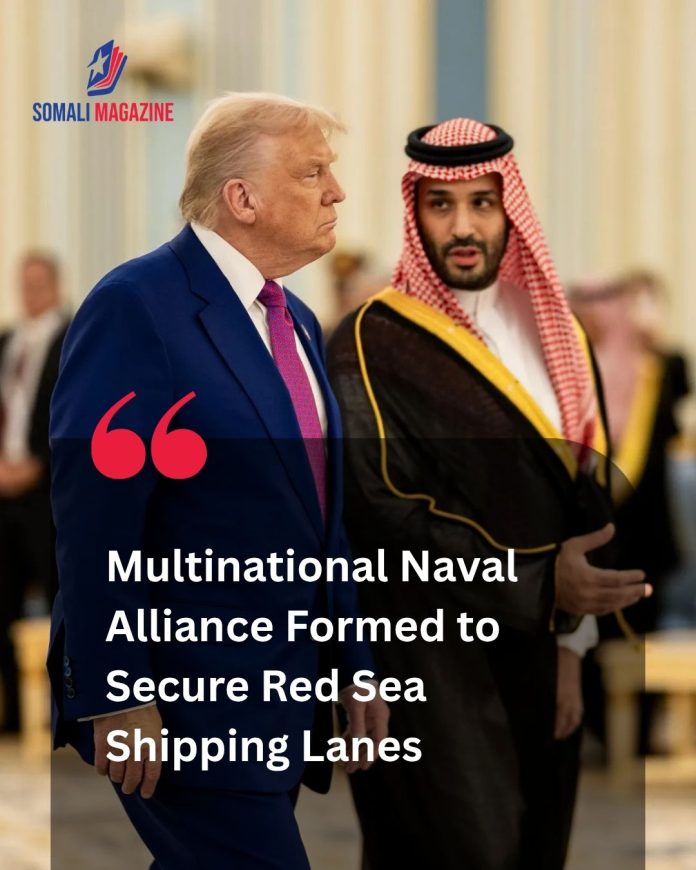
In response to escalating maritime threats along crucial global trade corridors, Saudi Arabia seeks international coalition to protect Red Sea shipping from Houthis, according to military officials and diplomatic sources. On Thursday, defense representatives from dozens of nations convened in Riyadh to discuss the creation of a multinational defensive maritime alliance. The proposed security initiative aims to safeguard commercial vessels and vital energy transport routes across the Red Sea, the Bab el-Mandeb Strait, and the Gulf of Aden following a series of recent missile and drone attacks targeting merchant shipping.
The diplomatic push follows a formal declaration by Yemen’s Iran-aligned Houthi movement on July 20 imposing a naval blockade against Saudi-linked vessels in the southern Red Sea. In response to the escalating threats, Saudi forces conducted targeted airstrikes against Houthi military sites near Hodeidah, which officials stated were being utilized to launch attacks on international shipping lanes. The proposed multinational coalition seeks to establish a coordinated framework featuring joint naval patrols, enhanced maritime surveillance, real-time intelligence sharing, and integrated defense measures to prevent further disruptions along one of the world’s most economically critical waterways.
Fourteen founding countries—including Saudi Arabia, Somalia, Djibouti, Egypt, Turkey, Pakistan, Kuwait, Bahrain, Qatar, Jordan, Sudan, Nigeria, Bangladesh, and Yemen’s internationally recognized government—endorsed the foundational charter during hybrid conference sessions. The agreement establishes a centralized command headquarters and operational hub hosted in Riyadh to synchronize maritime security efforts. Participating delegates emphasized that the coalition is structured as a purely defensive mechanism designed to uphold freedom of navigation and ensure global energy security without infringing on territorial sovereignty.
The inclusion of Horn of Africa nations, such as Somalia and Djibouti, underscores the interconnected security dynamics between East Africa and the Arabian Peninsula. Regional security experts note that persistent disruptions near the Bab el-Mandeb Strait carry severe economic ramifications for coastal African nations, threatening commercial shipping lanes, elevating freight insurance costs, and straining regional supply chains. By aligning maritime defense protocols across both shores of the Red Sea, regional governments aim to build a cohesive security barrier capable of deterring non-state actors and preserving freedom of commerce.
As Saudi Arabia seeks international coalition to protect Red Sea shipping from Houthis, global shipping companies and international trade bodies continue to monitor the security situation closely. Maritime authorities stress that maintaining uninterrupted passage through the Red Sea and Suez Canal maritime corridor remains vital for global commercial stability, as rerouting vessels around the Cape of Good Hope adds substantial costs and transit delays. While operational details and force contributions are currently being finalized among participating states, the establishment of the defensive coalition marks a significant regional effort to restore stability along a vital maritime lifeline.