
Facebook

Twitter (X)

Instagram

Somali Magazine - People's Magazine
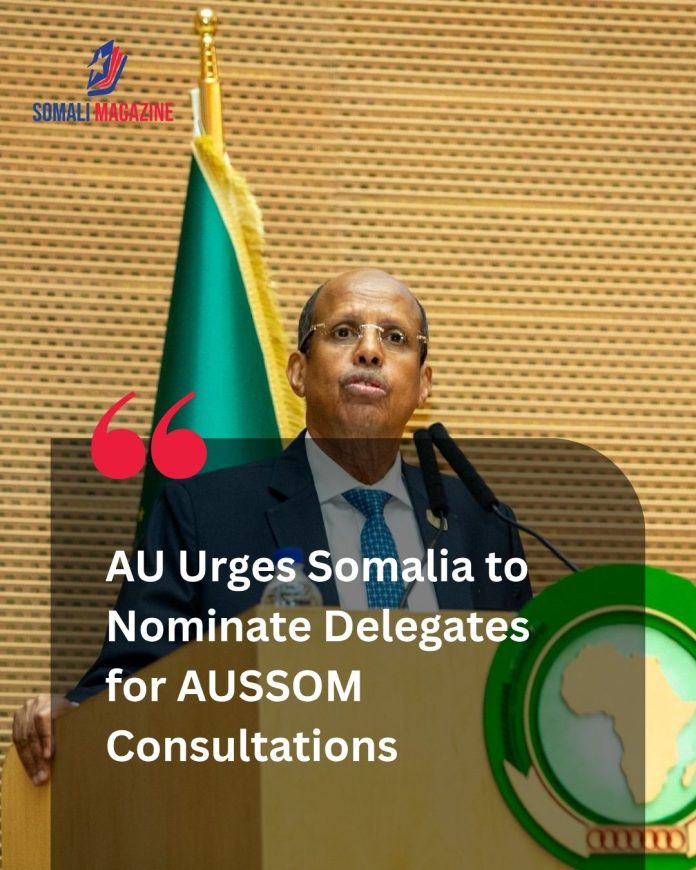
As diplomatic momentum builds over peace support operations in the Horn of Africa, the African Union urges Somalia to nominate delegates for key AUSSOM consultations scheduled to shape the operational and financial future of the peacekeeping mission. An official urgent communication sent from the African Union Commission in Addis Ababa to the Somali Embassy requested that the Federal Government of Somalia designate representatives immediately to attend strategic sessions. According to diplomatic sources, technical deliberations began in Ethiopia before advancing to senior-level negotiations in Kampala, Uganda, where leaders will formulate policy recommendations. The consultative calendar culminates in an Extraordinary Summit of Troop Contributing Countries and Police Contributing Countries, where regional heads of state are expected to formally endorse transition frameworks and operational structures.
The high-level gathering comes at a critical juncture for the African Union Support and Stabilization Mission in Somalia as international partners re-evaluate funding models and logistical commitments. Concerns regarding the long-term sustainability of the deployment intensified after major external donors signaled shifts in their financial contributions to mission logistics. Diplomatic notes highlight that the consultations will thoroughly evaluate several strategic models, including structural force adjustments, sustainable funding mechanisms, and updated timeline protocols for security handovers. African Union officials noted that the commission is covering all expenses related to the Somali delegation’s participation to ensure Mogadishu remains fully integrated into decision-making processes alongside military chiefs and defense ministers.
Federal participation is viewed by regional analysts as vital for establishing a clear consensus on national security priorities and joint operational capabilities. Somali defense planners emphasize that maintaining operational continuity along primary transit corridors is essential for preserving recent counterterrorism gains against insurgent networks. Meanwhile, troop-contributing nations from across East and Central Africa are seeking clear guarantees regarding operational support, medical evacuation capabilities, and supply chain logistics before committing forces to future mandate cycles. Regional security experts maintain that aligning federal governance goals with multilateral peacekeeping frameworks provides the most effective defense against security voids during state-building transitions.
Beyond immediate security coordination, the upcoming summit in Kampala is expected to establish long-term political and administrative guidelines for regional peacekeeping. African Union diplomats reiterated that establishing a unified strategy between federal institutions in Mogadishu and contributing member states remains indispensable for regional stability. With technical discussions concluding in Addis Ababa and ministerial assemblies convening in Uganda, international observers underscore that prompt Somali representation will ensure the nation’s sovereign interests remain central to all adopted security resolutions. Government representatives in Mogadishu confirmed receipt of the formal invitation, noting that inter-ministerial evaluations are underway to select qualified delegates to represent Somalia at the strategic forums.