
Facebook

Twitter (X)

Instagram

Somali Magazine - People's Magazine
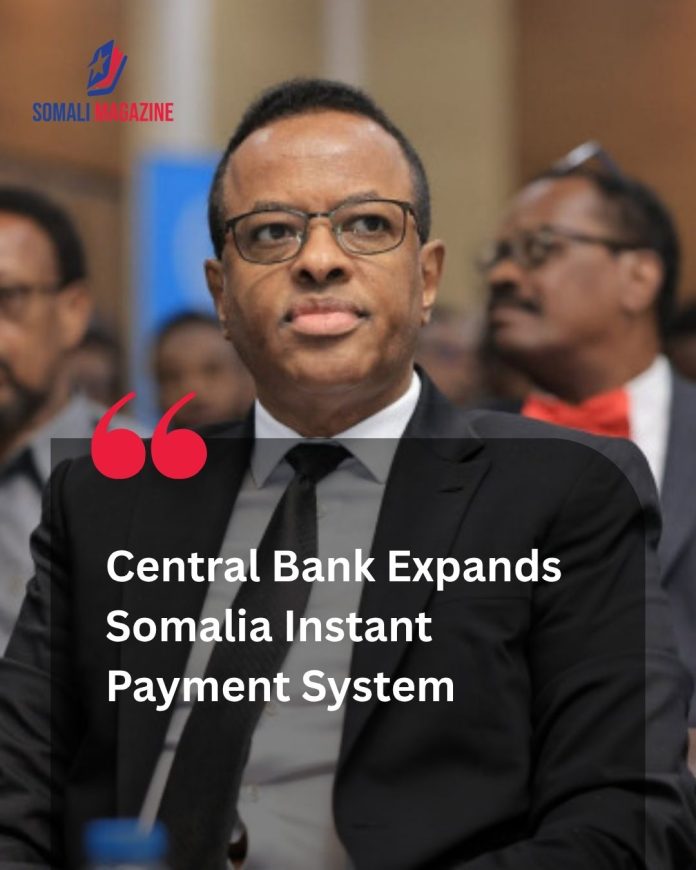
The Somali central bank expands national payment infrastructure across commercial banking institutions and mobile money ecosystems to accelerate financial inclusion and modernize the nation’s digital economy. Driven by the Central Bank of Somalia alongside the Somalia Payment Switch, the expanding roll-out of the Somalia Instant Payment System provides real-time, round-the-clock interoperability between traditional bank accounts, digital wallets, and point-of-sale systems. Building on the initial integration of primary commercial banks, official mandates now direct remaining financial institutions and major mobile network operators to integrate into the central switch, eliminating historical barriers between mobile money users and formal banking networks across the Horn of Africa.
Central bank leadership underscores that unifying fragmented payment channels remains essential for establishing a transparent, fully regulated digital ecosystem. With over two-thirds of domestic commerce already conducted through informal digital and mobile channels, expanding the national payment switch allows consumers and local merchants to complete instant transfers using standardized banking applications or unified quick-response code standards. The central clearing mechanism, operated directly by the monetary authority, manages real-time liquidity settlement, automated transaction monitoring, and centralized fraud prevention protocols. This structured oversight significantly reduces transaction costs, minimizes clearing delays, and mitigates risks associated with unmonitored cash transactions.
The technological rollout is powered by specialized enterprise payment software capable of handling high-volume, low-value peer-to-peer and merchant transactions around the clock. Initial operational phases utilized cloud computing infrastructure to launch national connectivity, with technical teams currently transitioning core processing modules to dedicated local data facilities to strengthen long-term network resilience and national data sovereignty. Financial analysts view the seamless integration of mobile money platforms into formal clearinghouses as a decisive structural shift, aligning national financial oversight with international compliance frameworks while expanding formal credit access for small enterprise owners.
By linking mobile financial networks directly to commercial bank accounts, government agencies also plan to streamline public sector payments, vendor distributions, and emergency social assistance programs. As financial institutions finalize technical integration over coming months, economic planners anticipate that universal interbank and mobile wallet interoperability will strengthen formal economic growth, stabilize national monetary policy execution, and position the country as a competitive leader in regional digital finance innovation.