Facebook

Twitter (X)

Instagram

Somali Magazine - People's Magazine
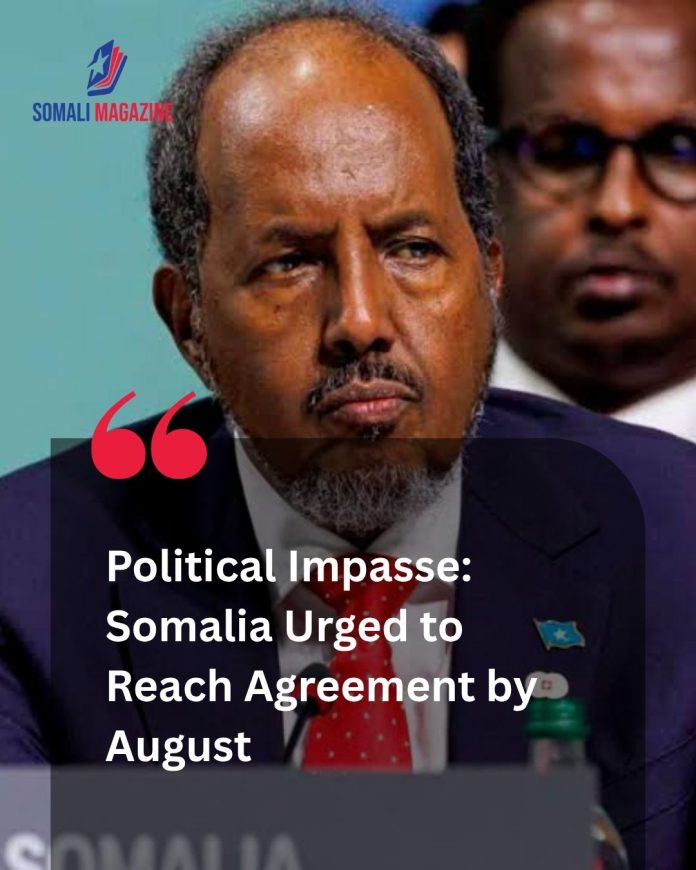
Somali leaders face pressure to reach political deal before end of August, with diplomatic sources confirming that international partners have issued urgent warnings regarding the country’s prolonged institutional impasse. As the federal government and opposition groups navigate a deepening constitutional crisis, donors have signaled that continued political infighting could trigger a formal re-evaluation of development support, project financing, and broader bilateral cooperation. The warning, which emphasizes the necessity of an inclusive settlement, underscores growing anxiety among foreign backers that the current deadlock threatens to undermine national security operations and the hard-won stabilization gains achieved by the African Union Support and Stabilization Mission in Somalia (AUSSOM).
The political landscape remains fractured following the March 2026 constitutional amendments, which extended presidential and parliamentary terms from four to five years. While the administration of President Hassan Sheikh Mohamud frames these reforms as essential steps toward establishing a sustainable “one person, one vote” electoral model, the Somali Future Council—a coalition of opposition leaders, former heads of state, and the leadership of Puntland and Jubaland—has rejected the changes as an unconstitutional power consolidation. This rift has effectively halted consensus on the framework for upcoming national elections, with key federal member states boycotting government-led dialogue initiatives over concerns regarding transparency and inclusivity.
In a proactive effort to break the cycle of instability, the Somali Future Council issued an open letter on July 27, 2026, addressed to international troop-contributing countries and security partners. The council advocated for the establishment of an inclusive Transitional Council tasked with overseeing the nation’s constitutional and electoral transition until new institutions are peacefully renewed. Their proposal prioritizes the restoration of institutional legitimacy and the safeguarding of the Somali National Army’s political neutrality, which critics argue has been compromised by the current executive-led reform agenda.
Although Turkey has recently resumed its role as a mediator by hosting electoral talks between the federal government and opposition representatives, sources familiar with the negotiations indicate that both sides have yet to engage in substantive discussions on the most contentious issues. Specifically, the fundamental disagreements regarding the electoral model and the legitimacy of the recent constitutional amendments remain unresolved. As the August deadline approaches, analysts warn that failure to secure a comprehensive political agreement may embolden insurgent groups like Al-Shabaab, who frequently exploit political grievances and fractured state authority to expand their operational reach. For Somalia’s leadership, the coming weeks represent a critical window to prioritize national consensus over partisan interests and restore the credibility of the federal project.