
Facebook

Twitter (X)

Instagram

Somali Magazine - People's Magazine
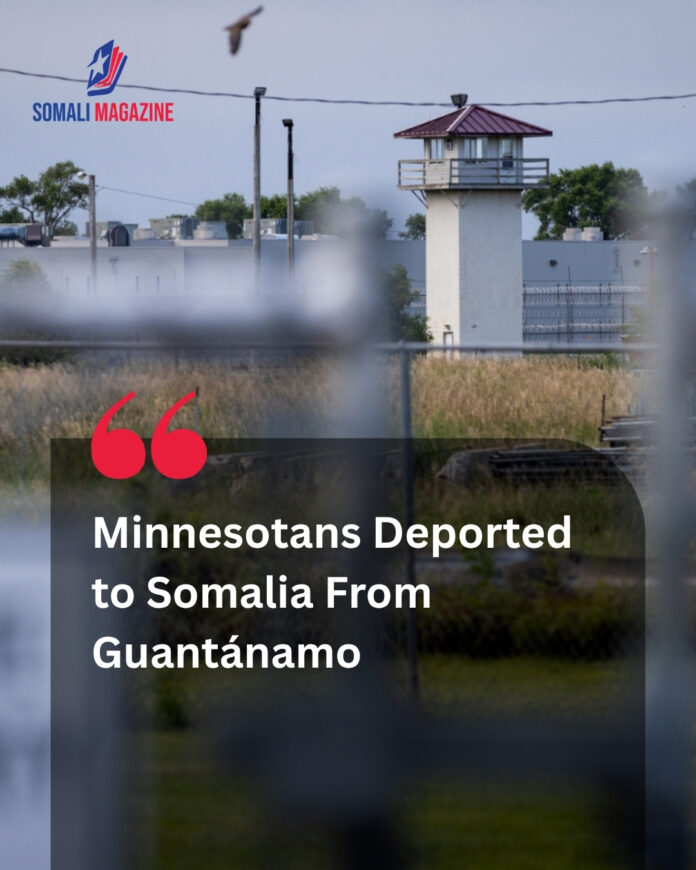
Three Minnesotans deported to Somalia after a month at Guantánamo Bay have returned to Mogadishu, capping an unprecedented and legally contentious chapter in U.S. immigration enforcement. The individuals, who had settled within the United States Midwest, were part of a larger group of eight Somali men transferred to the remote military facility in Cuba amid sweeping federal enforcement operations targeting diaspora communities. The secretive transfers and the subsequent utilization of a high-security military installation for civilian immigration detention have drawn sharp condemnation from civil liberties organizations, legal scholars, and regional lawmakers.
Accounts from the deportees reveal a harrowing ordeal characterized by prolonged uncertainty, isolation, and limited access to legal counsel while detained at the naval base. Family members and immigration attorneys have expressed profound shock over the unprecedented logistical route, emphasizing that several of the affected individuals possessed active legal challenges or long-standing community ties in the Twin Cities. Civil rights advocates argue that bypassing standard civilian detention protocols undermines constitutional due process guarantees and establishes a troubling precedent for the treatment of asylum seekers and foreign nationals navigating the American legal system.
Federal authorities defended the broader enforcement sweeps as a necessary component of national security and immigration compliance, though specific justifications regarding the use of the military facility remain opaque. Department of Homeland Security representatives have consistently declined to comment extensively on operational details or transfer logistics, citing operational security. Meanwhile, local advocacy groups and community leaders in Minnesota have mobilized to support affected families, offering legal aid and demanding greater transparency from federal agencies regarding the treatment and relocation of detainees.
The unexpected arrival of the deportees in Somalia has added complex humanitarian and reintegration challenges for local authorities and relatives unaccustomed to such extraordinary repatriation routes. As legal experts continue to scrutinize the systemic implications of utilizing offshore military installations for immigration processing, the unfolding situation highlights the deep vulnerabilities faced by immigrant communities. The episode remains a focal point in ongoing debates surrounding immigration reform, executive overreach, and the boundaries of federal enforcement authority.