
Facebook

Twitter (X)

Instagram

Somali Magazine - People's Magazine
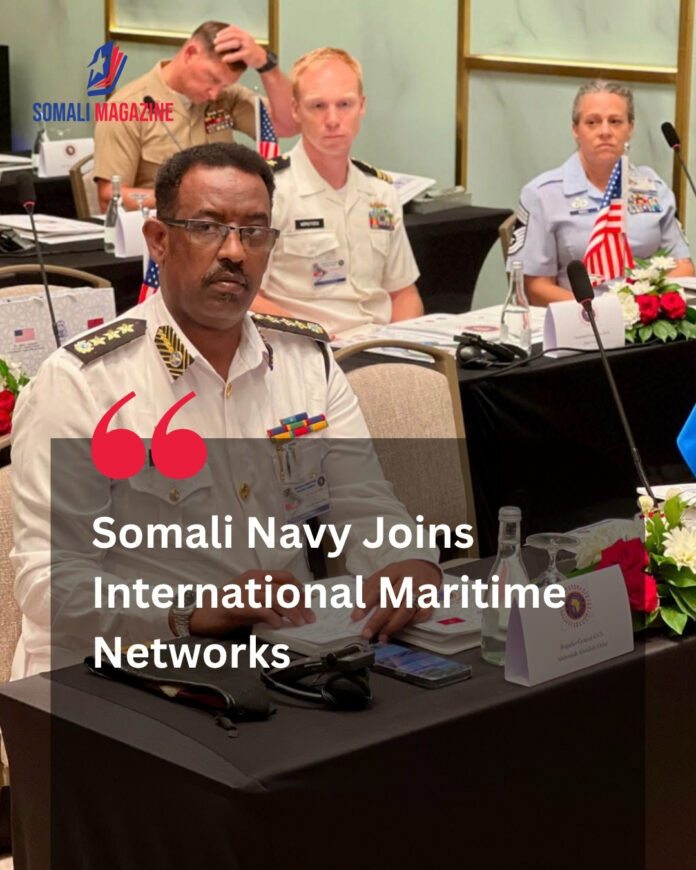
Somali Navy joins two international maritime security networks in a landmark development designed to enhance the nation’s maritime traffic management and information-sharing capabilities. General Abdullahi Omar Abdullahi, the commander of the Somali Navy, officially signed the historic agreements during the high-level international gathering held in Venice, Italy. The integration into these cooperative frameworks marks a pivotal step forward for the country as it actively seeks to strengthen oversight across its strategic coastal waters and engage more deeply with global maritime partners.
The newly formalized agreements incorporate Somalia into the Virtual Regional Maritime Traffic Centre and the Trans-Regional Maritime Network, both of which unite nations with shared interests in safeguarding vital global shipping lanes. By joining these systems, the Somali naval force gains a formalized mechanism to exchange real-time data regarding vessel movements, monitor regional traffic patterns, and coordinate closely with international naval counterparts. Officials emphasized that seamless information sharing is critical for securing the nation’s extensive coastline, which spans major trading routes connecting the Indian Ocean, the Gulf of Aden, and the Red Sea.
Operating against the backdrop of the 15th International Seapower Symposium organized by the Italian Navy, the formal accession highlights Mogadishu’s growing integration into multilateral security architectures. The multi-day summit brought together naval commanders and defense leaders from around the world to address complex challenges including regional maritime security, the protection of undersea communication cables, and the modernization of naval infrastructure. On the sidelines of the conference, the Somali naval chief also held productive bilateral discussions with key international defense figures, exploring expanded avenues for training support and joint capability development.
This diplomatic and operational milestone reinforces broader ongoing efforts to rebuild national naval capacities following years of vulnerability to piracy and illicit maritime activities. Defense analysts note that active participation in structured multinational networks significantly improves situational awareness and response readiness for developing coastal states. As the implementation of these agreements gets underway, federal authorities remain committed to fostering robust international partnerships that ensure safe, stable, and well-monitored waters for commercial navigation and regional prosperity.