
Facebook

Twitter (X)

Instagram

Somali Magazine - People's Magazine
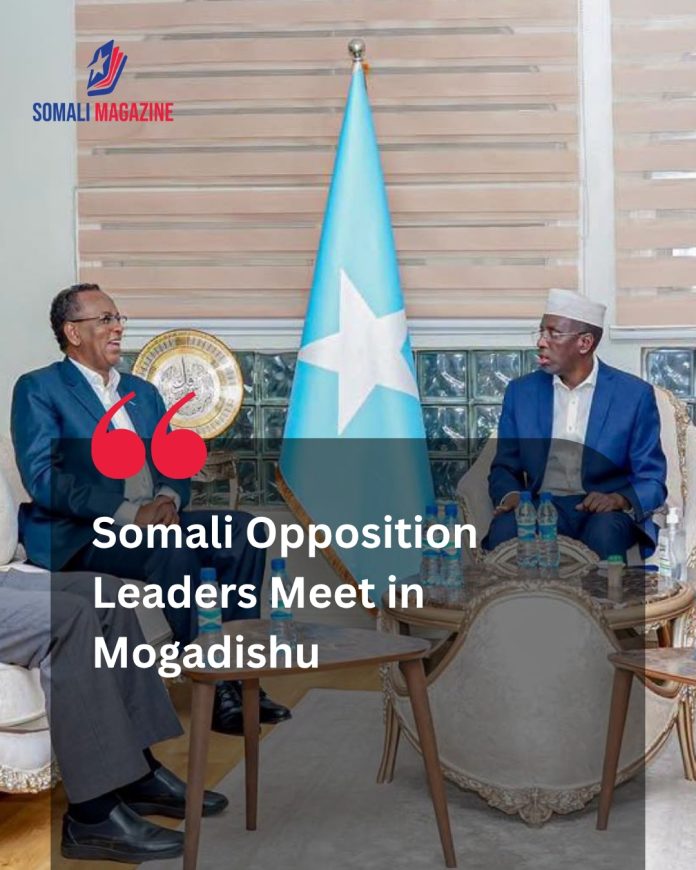
Somali opposition leaders meet in Mogadishu to coordinate strategy surrounding the ongoing political transition, national state-building frameworks, and pressing security challenges facing the country. Former Somali President Sharif Sheikh Ahmed, who heads the Himilo Qaran party, held high-level discussions with former Prime Minister Abdi Farah Shirdon, leader of the Haybad Qaran and Xaqsoor alliance, during a strategic gathering in the capital. According to official statements released by participating political entities, the evening consultations focused heavily on evaluating the broader political environment and seeking unified responses to complex governance hurdles. The high-profile meetings underscore intensifying diplomatic efforts among political figures as stakeholders navigate critical institutional milestones.
During the series of consultations, political leaders also engaged with other prominent former officials, including former prime ministers Hassan Ali Khaire and Mohamed Hussein Roble, to review the state of domestic affairs and deliberate on collaborative pathways forward. Representatives noted that open dialogue among diverse political factions remains essential for safeguarding national unity and addressing structural disagreements regarding electoral roadmaps. The discussions highlighted shared concerns over institutional stability, public safety, and the necessity of inclusive consensus-building to ensure that upcoming governance frameworks enjoy broad political legitimacy across federal member states.
The talks in Mogadishu arrive at a crucial juncture for the Horn of Africa nation, as regional authorities and international observers monitor developments closely. Civil society actors and political analysts have consistently emphasized that inclusive negotiations are vital to preventing polarization and maintaining momentum in state-building initiatives. While federal institutions continue pushing forward with legislative and administrative reforms, opposition groups maintain that transparent consultations and shared accountability are indispensable for long-term peace. The recent alignment of key opposition figures signals a renewed emphasis on coordinated political positioning as stakeholders address the country’s evolving institutional landscape.
As the political stakeholders continue their deliberations, further meetings and policy statements are anticipated in the coming weeks. Observers suggest that the ability of federal leaders and opposition figures to bridge ideological and administrative divides will heavily influence the nation’s stability and democratic trajectory. For now, the focused dialogue in the capital demonstrates an active commitment among political leaders to engage constructively with the complex challenges defining Somalia’s current constitutional and electoral evolution.