Facebook

Twitter (X)

Instagram

Somali Magazine - People's Magazine
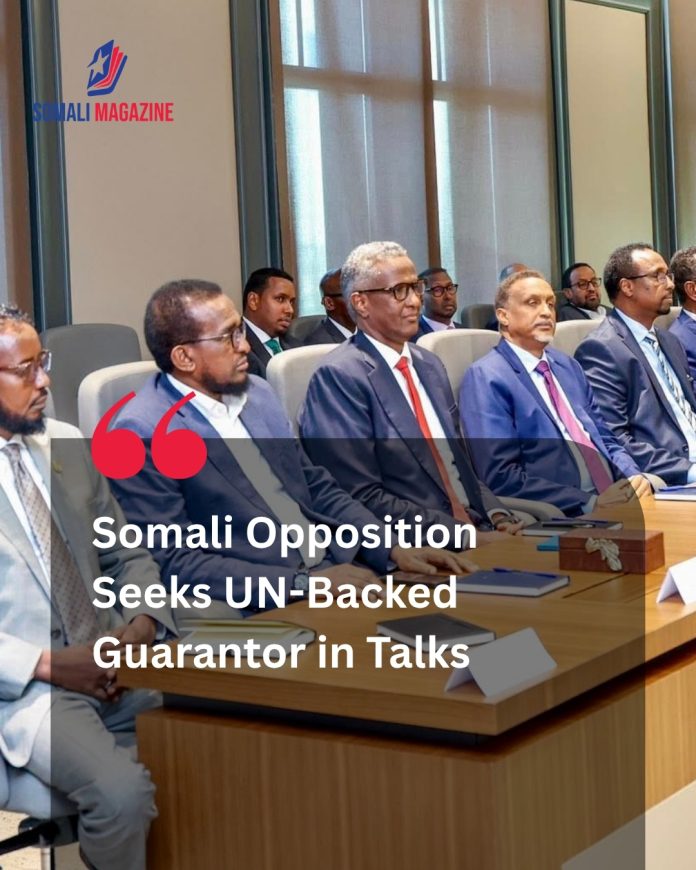
Somali opposition seeks UN-backed guarantor and equal footing in talks as political factions across the country attempt to negotiate a sustainable path forward for national elections. Prominent opposition figures and allied political coalitions meeting in Mogadishu emphasized that future negotiations regarding the country’s electoral architecture must include robust international mediation to ensure fairness and transparency. According to official statements released following the high-level consultations, participating leaders argued that engaging with federal authorities requires a neutral third-party guarantor to oversee the implementation of any agreed-upon political compacts and prevent potential deadlocks.
The core demand for parity and oversight arises amid persistent disagreements over the mechanics of upcoming democratic processes, universal suffrage models, and institutional timelines. Opposition representatives maintained that meaningful political dialogue cannot succeed if ruling authorities retain unilateral control over electoral administration and security arrangements. By insisting on equal footing in talks, the coalition aims to secure a balanced negotiating environment where regional administrations, civil society perspectives, and political parties can influence national policy decisions equitably. Analysts note that these foundational disagreements highlight the deep institutional divisions currently characterizing the nation’s evolving political landscape.
Federal authorities have consistently defended their administrative roadmap, emphasizing that state-building initiatives must progress through recognized constitutional channels and established governmental bodies. Government spokespersons have previously stressed that continuous dialogue remains open to all stakeholders willing to participate within the legal framework of the republic. However, bridging the gap between the administration’s preference for centralized institutional management and the opposition’s demand for external guarantees remains a complex diplomatic challenge. International partners and regional observers continue to monitor the situation closely, urging both sides to prioritize compromise and national stability above partisan interests.
The push for a United Nations-backed guarantor underscores the vital role international actors play in mediating political impasses within the Horn of Africa. As diplomatic consultations persist behind closed doors, the international community has repeatedly emphasized that inclusive, consensus-driven agreements are essential for preventing further political polarization. Whether federal leaders will accommodate the demand for external oversight and balanced representation remains uncertain as discussions evolve. For now, the unified stance adopted by the opposition signals a concerted effort to reshape the dynamics of political engagement and secure binding commitments for the nation’s democratic future.