
Facebook

Twitter (X)

Instagram

Somali Magazine - People's Magazine
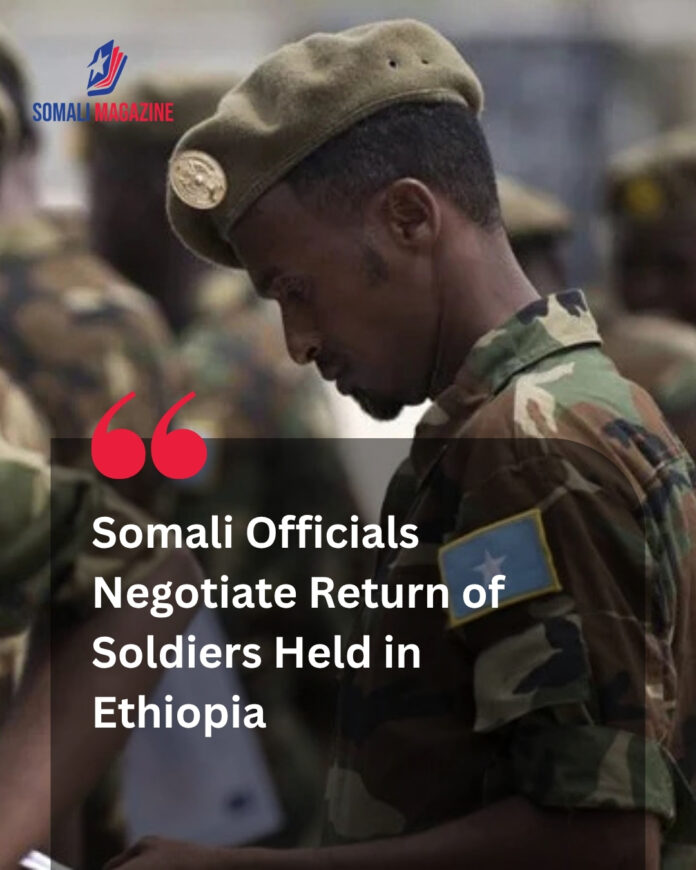
Somali-trained soldiers held in Ethiopia as officials work on return process through delicate bilateral negotiations between diplomatic representatives and regional security authorities. The ongoing incident involves hundreds of newly trained personnel who crossed the federal border under complex security circumstances following the completion of their instruction at regional defense camps. Defense officials confirmed that federal authorities in Mogadishu are maintaining continuous contact with Ethiopian regional administrators to clarify the operational circumstances surrounding the movements and establish a structured protocol for their safe, organized repatriation back into national command structures.
Initial security briefings indicate that the troops were originally trained to reinforce ongoing national counter-terrorism initiatives and protect strategic corridors against insurgent groups. However, logistical challenges and localized security considerations along domestic transit routes prompted the force to cross into neighboring territory, where regional authorities intercepted and held them for verification. National security advisors emphasized that official channels are actively addressing the administrative misunderstandings to ensure the personnel are returned safely without causing friction between neighboring defense institutions.
Cross-border military movements remain particularly sensitive across the Horn of Africa, where diplomatic coordination and precise communication between neighboring governments are paramount. Security analysts note that establishing transparent repatriation frameworks is essential to maintaining institutional trust, preserving border stability, and safeguarding the welfare of military personnel. Both governments have prioritized cautious diplomatic dialogue over public confrontation, recognizing that resolving border misunderstandings through formal military and diplomatic mechanisms serves the broader security interests of both nations.
As diplomatic negotiations continue between civil and military officials, federal authorities remain committed to bringing the matter to a peaceful resolution. The federal security apparatus continues to review border security protocols and transit management strategies to prevent similar operational missteps during future troop deployments. By maintaining steady diplomatic engagement and prioritizing professional military conduct, officials express confidence that the structured return process will proceed smoothly, ensuring that the trained troops can fulfill their primary mandate of protecting national security and serving the public interest.