
Facebook

Twitter (X)

Instagram

Somali Magazine - People's Magazine
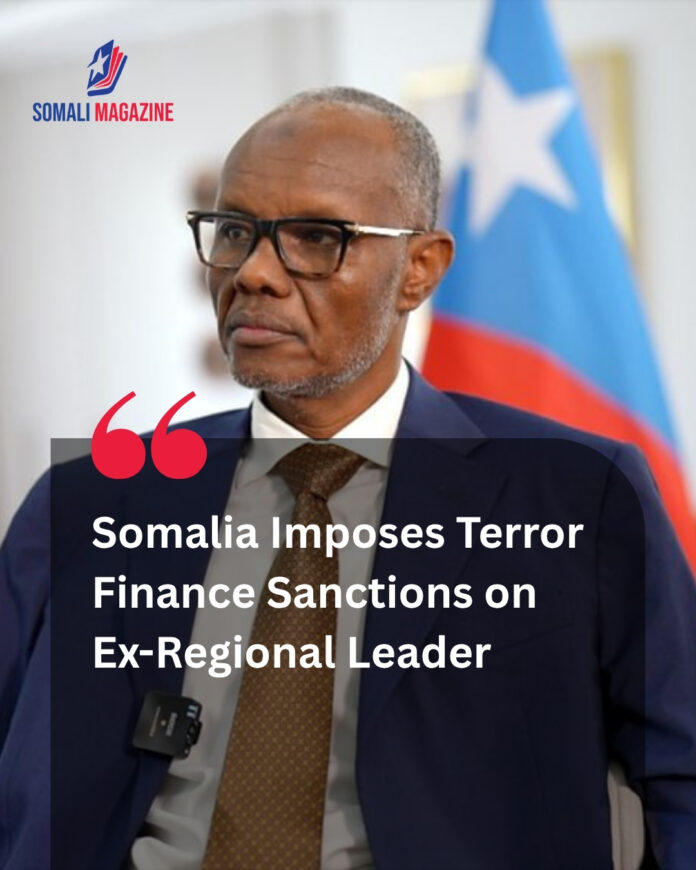
Somalia places ex-South West State President Laftagareen on terror finance sanctions list following an official determination by the National Anti-Money Laundering and Counter-Terrorism Financing Committee. In a formal notice issued in Mogadishu, federal authorities announced targeted financial restrictions against former South West State President Abdiaziz Hassan Mohamed, widely known as Laftagareen, alongside nine other individuals. According to official findings released by the committee, the decision follows a comprehensive review of intelligence, financial records, and operational evidence that indicated suspected links to terrorist financing and coordination with insurgent networks.
The designation invokes the country’s national financial sanctions framework, legally prohibiting all commercial banks, money transfer businesses, and financial institutions from providing services or facilitating transactions for designated individuals. Under the order, all domestic financial entities are required to freeze associated assets immediately and submit suspicious activity disclosures to the Financial Reporting Centre without delay. Federal regulatory authorities warned that any institution or individual found violating these targeted financial restrictions will face severe administrative and legal penalties under prevailing anti-money laundering legislation.
The imposition of sanctions marks a significant escalation in the ongoing political and security developments surrounding South West State, where Laftagareen led the regional administration from 2018 until earlier this year. Following political transitions in the regional capital of Baidoa, federal authorities and regional officials previously expressed concern over armed confrontations and security disruptions involving political loyalists near urban centers. While committee officials emphasized that the financial sanctions strictly target illegal financial flows and suspected insurgent facilitation, political observers note that the decision underscores the federal government’s broader effort to regulate regional governance frameworks.
Representatives associated with the former regional leadership have consistently denied allegations of illegal financial activity or collaboration with militant groups, characterizing recent measures as politically motivated actions linked to regional governance disputes. Nevertheless, federal anti-money laundering officials maintain that the sanctions are strictly evidence-based legal instruments designed to safeguard the integrity of the national financial sector. As regulatory bodies enforce asset freezes across commercial networks, civil society organizations continue to call for adherence to due process and constitutional norms to maintain institutional stability and public trust across all regional member states.