
Facebook

Twitter (X)

Instagram

Somali Magazine - People's Magazine
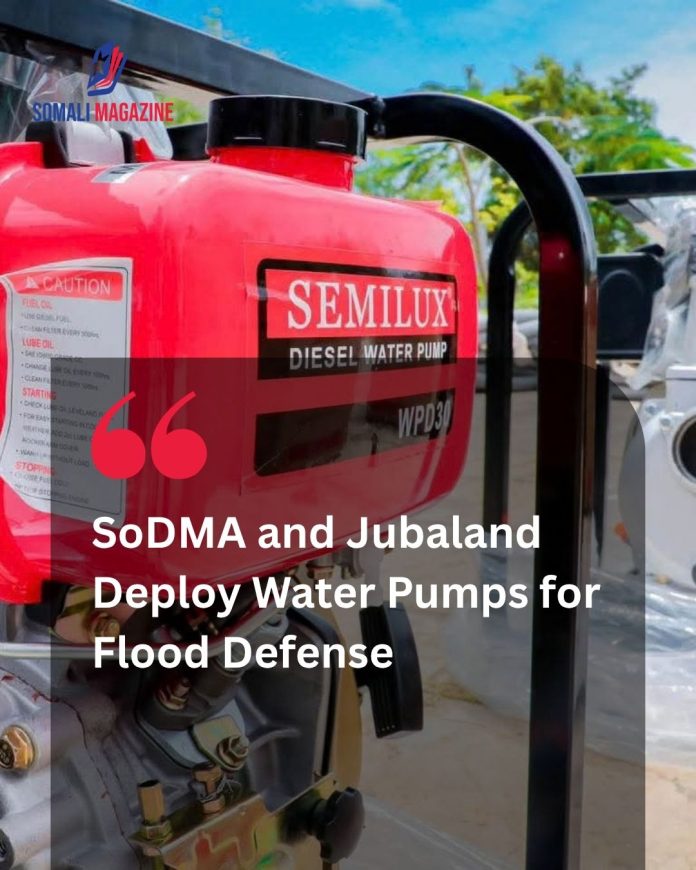
Somalia Strengthens Flood Preparedness as SoDMA, Jubaland Deploy Water Pumps in a coordinated effort to mitigate potential climate-related disasters across vulnerable regional districts. The Somali National Disaster Management Agency (SoDMA), acting in close cooperation with the Jubaland Ministry of Relief and Disaster Management, prepared ten specialized water pump engines aimed at clearing stagnant water and urban flooding. This strategic deployment targets high-risk communities and residential neighborhoods expected to face severe weather disruptions associated with anticipated heavy rainfall and Super El Nino conditions.
The initiative forms a core part of broader national strategies prioritizing early action, anticipatory risk reduction, and proactive infrastructure readiness. Local authorities, including the Kismayo Municipal Administration, received the drainage equipment to manage stormwater accumulation and protect civilian livelihoods from seasonal displacement and property damage. By positioning critical response assets directly within high-hazard zones, regional and federal stakeholders seek to shorten emergency reaction times and safeguard local infrastructure against recurring environmental shocks.
Disaster management officials have emphasized that institutional collaboration remains vital to addressing Somalia’s complex climate vulnerabilities, particularly as extreme weather patterns become more frequent. The collaborative framework between SoDMA and regional ministries underscores a shift from reactive crisis management toward systematic, community-level resilience. Ongoing monitoring and preparedness coordination continue across multiple sectors to ensure that municipal authorities are fully equipped to handle impending emergency scenarios.
As the rainy season approaches, federal and regional agencies are scaling up awareness campaigns and reinforcing local defenses to protect populations residing in flood-prone riverine and urban corridors. Continued partnerships with humanitarian organizations and local administrations aim to maintain comprehensive readiness across affected regions. Through these concerted preventive measures, stakeholders hope to minimize human suffering, protect local commerce, and sustain long-term stability in communities facing environmental adversity.