
Facebook

Twitter (X)

Instagram

Somali Magazine - People's Magazine
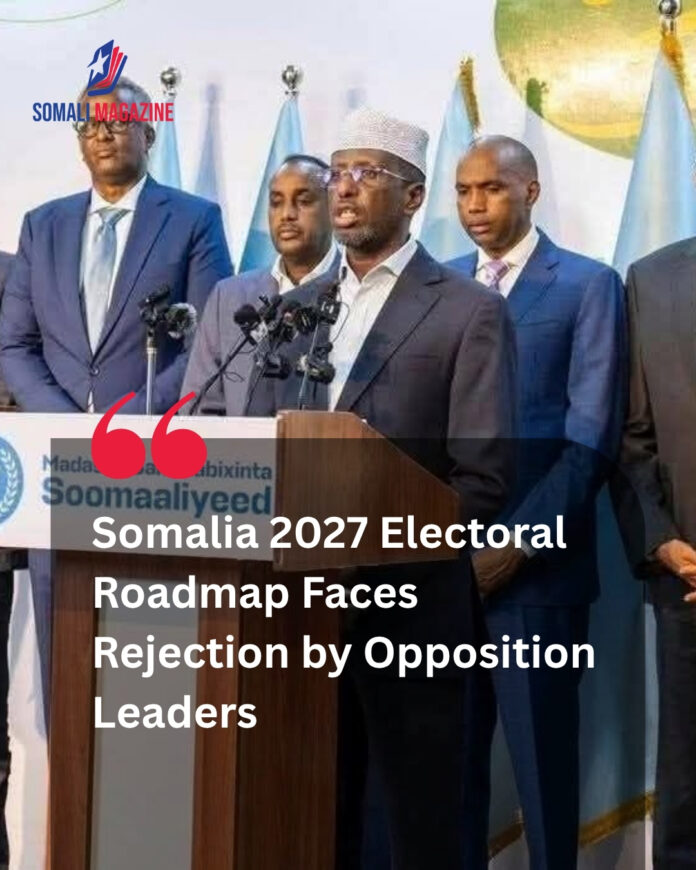
Somalia’s 2027 election plan faces fresh uncertainty as opposition rejects timetable announced by federal electoral authorities, deepening the political standoff over the nation’s democratic trajectory. Following the formal release of the electoral roadmap by the National Independent Electoral and Boundaries Commission, key opposition coalitions and regional member states voiced strong objections, characterizing the unilateral scheduling as a step back for national unity. The commission had officially set parliamentary polling for April 15, 2027, followed by the presidential election on May 15, 2027, alongside reopening voter registration drives nationwide.
The swift rejection by prominent political figures and regional leaders highlights unresolved constitutional and procedural disagreements surrounding federal governance. Representatives from the opposition alliance known as the Somali Salvation Forum argued that establishing firm election dates without achieving broad political consensus risks destabilizing the country’s fragile state-building framework. Opposition spokespersons emphasized that previous successful democratic transitions relied heavily on negotiated agreements between federal authorities, regional member states, and civic organizations rather than decisions made solely by federal administrative bodies.
At the core of the political friction are differing interpretations regarding the constitutional timeline and the implementation of a direct voting system. Federal officials defend the announced schedule, stating that establishing clear operational milestones remains essential for administrative clarity, voter registration, and security coordination across federal territories. However, regional member states such as Puntland and Jubaland have indicated that proceeding without consensus could compel regional administrations to pursue independent political processes, raising concerns over parallel electoral tracks.
International partners and domestic civil society organizations are closely monitoring the political developments, urging all stakeholders to maintain open channels of communication. Political analysts stress that reconciling the administrative schedule with inclusive consensus-building is vital to ensuring electoral credibility and avoiding security disruptions. As the political dialogue continues in Mogadishu, federal leaders face growing calls to convene comprehensive consultative talks to establish an agreed-upon framework capable of delivering transparent, stable, and universally accepted elections for all citizens.