
Facebook

Twitter (X)

Instagram

Somali Magazine - People's Magazine
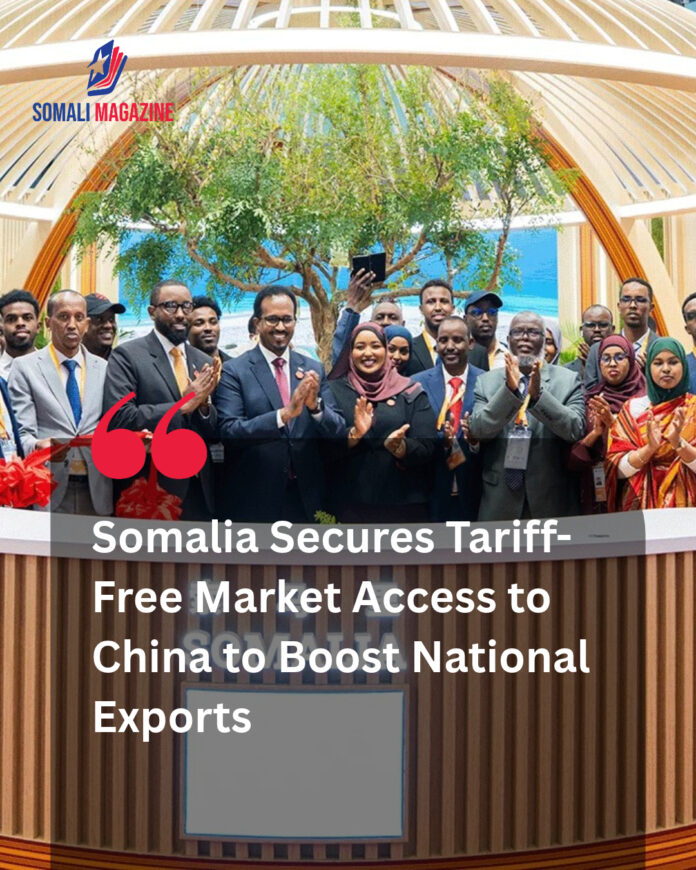
As part of a strategic initiative to boost national exports, Somalia targets China’s 1.4 billion-consumer market with tariff-free access following Beijing’s implementation of a zero-tariff policy for least developed nations maintaining diplomatic ties with China. The bilateral trade framework provides Somali exporters with duty-free entry across thousands of tariff lines, creating unprecedented commercial opportunities for domestic agricultural, livestock, and maritime sectors. Announced in connection with commitments made under the Forum on China-Africa Cooperation, the trade arrangement aims to expand bilateral commerce, reduce economic deficits, and integrate East African goods directly into supply chains across Asia.
The preferential trade policy comes at a crucial moment for domestic producers seeking to diversify their international export footprint beyond traditional regional markets. Agricultural trade analysts emphasize that securing duty-free access allows Somali exporters to scale up commercial shipments of high-demand commodities, including sesame seeds, dried lemons, frankincense, and processed livestock products. Furthermore, the Somali fisheries sector stands to gain substantial commercial advantage, with domestic seafood exporters now positioned to supply coastal marine products directly to Chinese consumers without facing prohibitive import duties.
To fully leverage the commercial potential of the trade initiative, federal ministries and trade promotion agencies are aligning national quality assurance and phytosanitary inspection protocols with Chinese import standards. The Ministry of Commerce and Industry, alongside domestic export associations, is coordinating technical workshops to educate local agribusinesses on packaging, traceability, and customs compliance requirements. Government officials noted that establishing robust quality control frameworks is essential for ensuring that domestic products satisfy stringent regulatory guidelines enforced by international trade authorities.
Economic experts observe that zero-tariff access can serve as a catalyst for attracting foreign direct investment into processing, cold chain logistics, and port infrastructure across the country. As Somalia targets China’s 1.4 billion-consumer market with tariff-free access, public-private partnerships are expected to focus on modernizing processing facilities to increase value-added production prior to export. Moving forward, national trade officials and business leaders remain dedicated to expanding production capacity, enhancing supply chain efficiency, and establishing durable commercial partnerships to maximize the long-term economic benefits of the trade agreement.