Facebook

Twitter (X)

Instagram

Somali Magazine - People's Magazine
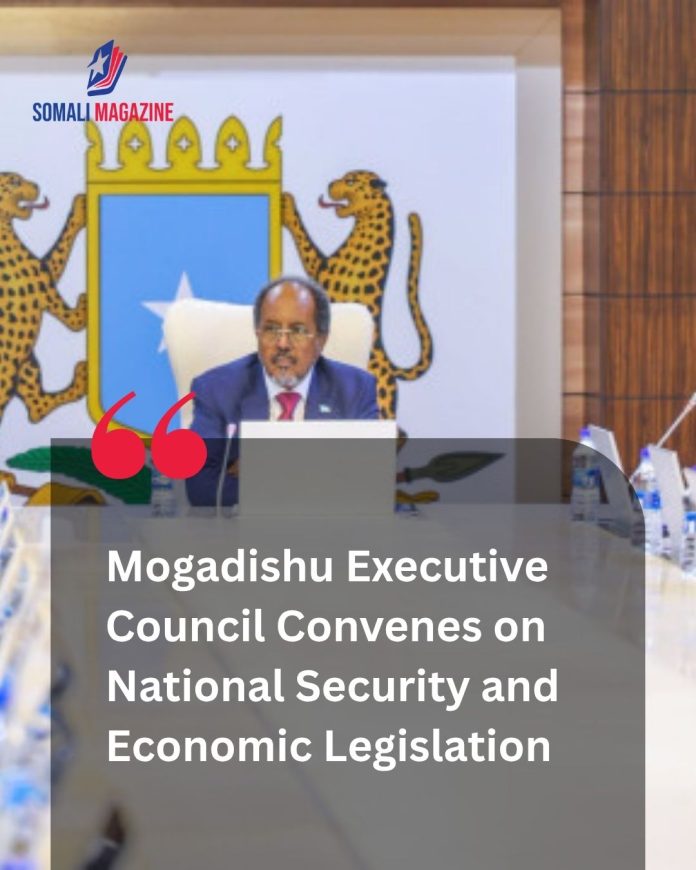
As the federal government accelerates efforts to strengthen state institutions and foster economic resilience, the Somali cabinet reviews security, approves business reform bill and Turkey religious cooperation pact during a pivotal executive session in Mogadishu. Chaired by President Hassan Sheikh Mohamud, the Council of Ministers evaluated ongoing military operations against extremist groups while simultaneously passing foundational legislation aimed at modernizing the nation’s commercial framework and expanding international religious partnerships.
During the security briefing, ministers received detailed updates on the status of military campaigns conducted by the Somali National Army alongside allied community forces. Government officials confirmed that frontline operations have achieved substantial tactical gains against al-Shabab insurgents, inflicting heavy losses and liberating key regional pockets. In parallel with anti-terrorism measures, the cabinet reiterated its commitment to advancing a transparent, one-person, one-vote electoral framework designed to ensure democratic participation across the country.
Turning to economic governance, the cabinet formally endorsed the Business Registration and Licensing Bill. According to ministerial statements, the landmark legislation aims to streamline administrative hurdles, eliminate regulatory redundancies, and foster a transparent environment for domestic and foreign investors. Policy experts note that formalizing commercial processes remains critical for Somalia as it seeks to attract long-term capital and stimulate job growth following years of economic volatility.
In a move to reinforce cultural and educational ties, the executive body approved a memorandum of understanding between Somalia’s Ministry of Endowments and Islamic Affairs and Turkey’s Presidency of Religious Affairs, known as Diyanet. The pact establishes an official framework for bilateral cooperation in religious administration, institutional education, and specialized professional training for religious personnel. Turkish development assistance has long played a prominent role in Somalia’s infrastructure and public services, and officials emphasize that this agreement will help standardize religious education and promote moderate Islamic scholarship.
The combined measures reflect a comprehensive strategy by the federal government to stabilize the country through simultaneous military, economic, and diplomatic initiatives. By aligning national security operations with structural economic reforms and strategic international alliances, federal authorities aim to build institutional capacity capable of sustaining long-term peace. Observers point out that the success of these legislative actions will depend on effective enforcement and continued political alignment between federal and regional stakeholders.