
Facebook

Twitter (X)

Instagram

Somali Magazine - People's Magazine
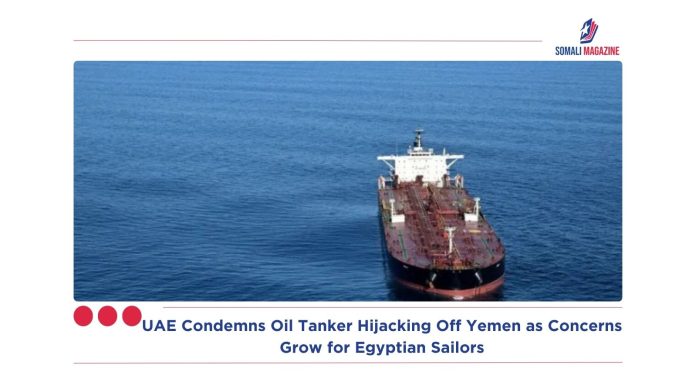
The United Arab Emirates has condemned an oil tanker hijacking Yemen incident involving Egyptian sailors, highlighting growing concerns over maritime security in the Red Sea region. In a statement issued by the UAE Ministry of Foreign Affairs, officials described the attack as a serious threat to international shipping and called for the immediate release of those onboard.
According to early reports, the tanker was seized off the coast of Yemen, an area that has seen increased instability linked to the country’s prolonged conflict. Details about the vessel, including its ownership and destination, have not been fully disclosed, and it remains unclear which group was responsible for the hijacking. Authorities have urged caution as investigations continue.
The presence of Egyptian sailors among the crew has drawn particular attention, with concerns raised about their safety and well-being. Egyptian officials have not yet provided a comprehensive update, though reports suggest that diplomatic channels are being engaged to secure the crew’s release. Maritime incidents in the region often involve complex negotiations, especially when multiple nationalities are affected.
The UAE condemnation reflects broader anxieties about Red Sea maritime security, a critical corridor for global trade and energy shipments. Analysts note that disruptions in this region can have far-reaching economic implications, particularly if attacks target oil tankers or other strategic vessels.
While no group has officially claimed responsibility, experts point out that waters off Yemen have been vulnerable to piracy, armed seizures, and conflict-related threats. The ongoing Yemen conflict has contributed to a volatile security environment, complicating efforts to ensure safe passage for commercial shipping.
International organizations and regional powers have, in the past, coordinated naval patrols and security measures to protect vessels navigating the area. However, according to maritime security analysts, evolving tactics and shifting conflict dynamics continue to pose challenges.
For now, the situation remains fluid, with limited verified information available about the condition of the crew or the status of the vessel. Officials from multiple countries are expected to monitor developments closely, and further updates are likely as more details emerge.
The incident underscores the persistent risks facing maritime operations in conflict-affected zones and highlights the importance of coordinated international responses to safeguard shipping routes and protect seafarers.