
Facebook

Twitter (X)

Instagram

Somali Magazine - People's Magazine
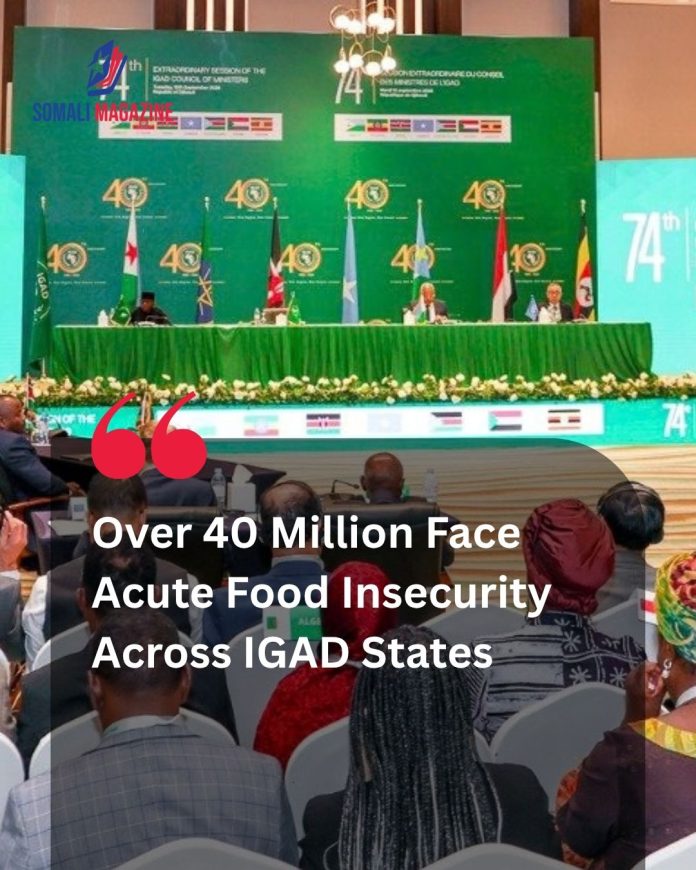
Over 40.3 million people at risk as food insecurity hits six IGAD states, according to a sobering regional report released by the Intergovernmental Authority on Development. The comprehensive analysis highlights that approximately 34 percent of the population evaluated across Djibouti, Kenya, Somalia, South Sudan, Sudan, and Uganda are currently facing high levels of acute food insecurity. Experts attribute this persistent regional crisis to a destructive convergence of escalating conflicts, recurring weather extremes, severe economic shocks, and a notable decline in international humanitarian funding.
While the overall figure shows a slight decrease from previous peaks due to localized recoveries in parts of Sudan and Uganda, conditions have deteriorated sharply in nations like Somalia, Kenya, and Djibouti. Prolonged drought conditions, failed agricultural seasons, and massive pasture shortages have severely crippled pastoralist and farming communities. Households across the affected territories face soaring staple food prices that drastically reduce purchasing power, leaving millions struggling to secure daily meals. Furthermore, the nutritional toll is profound, with millions of young children and vulnerable mothers suffering from acute malnutrition amid inadequate health and sanitation services.
During the regional launch of the assessment, IGAD leadership emphasized that the sheer scale of the emergency demands an immediate strategic pivot from reactive crisis management toward proactive anticipatory action. Officials outlined critical priorities, including strengthening early warning systems, investing in climate-resilient agricultural infrastructure, supporting robust regional food markets, and addressing the root drivers of displacement. Because food security challenges routinely transcend national borders, coordinated cross-border cooperation remains essential to mitigating future catastrophes.
Stakeholders and development partners agree that sustained investments in local resilience can prevent seasonal weather anomalies from escalating into full-scale famines. As regional governments and international agencies evaluate the findings, the collective message is clear: robust financial commitments and timely interventions are vital to protecting millions of lives and securing the long-term stability of the entire East African region.