
Facebook

Twitter (X)

Instagram

Somali Magazine - People's Magazine
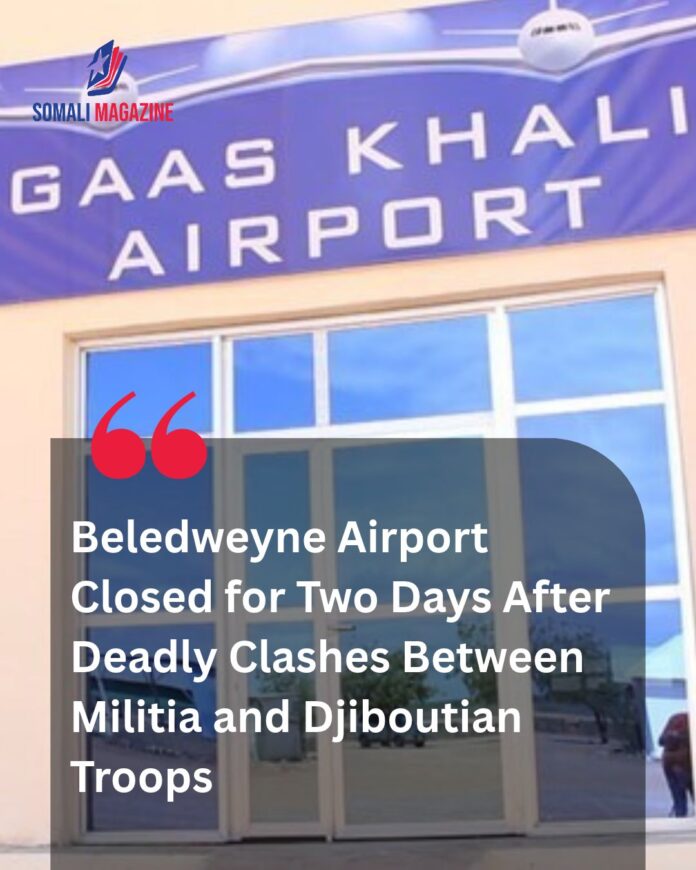
Commercial aviation and humanitarian logistics in central Somalia have been disrupted after Beledweyne airport closed for two days after deadly clashes between militia and Djiboutian troops at the strategic facility. According to local updates reported on Saturday, November 21, 2026, operations at Ugaas Khalif Airport remained suspended following Thursday’s armed confrontation between local clan fighters and African Union peacekeeping personnel stationed at the perimeter. The violence erupted around 1:00 p.m. local time on November 19 amid disputes over access to the runway and the arrival of federal troop flights, forcing commercial airlines to halt services and stranding passengers across the Hiiraan region. While Hirshabelle regional authorities extended condolences to families of those killed during the broader unrest in Beledweyne, exact casualty figures from the airport confrontation remained contested.
Conflicting accounts have emerged regarding the toll of the fighting at the airfield. Initial local reports alleged that two Djiboutian peacekeepers were killed during the exchange of fire, whereas the Djiboutian Embassy in Somalia issued an official statement on Friday asserting that Sector 4 forces of the African Union Support and Stabilization Mission in Somalia (AUSSOM) repelled an attempt by Macawiisley fighters to seize the facility and suffered no deaths or injuries. Following discussions involving militia commanders, airport officials, and peacekeeping leaders on Thursday evening, the local armed fighters—including members of the Dulmi Diid faction—withdrew from the airport grounds, leaving Djiboutian troops serving under the Hiil Walaal contingent in full control of airfield security.
The airport confrontation reflects deepening political instability across Hiiraan following the October 24, 2026 re-election of Hirshabelle President Ali Abdullahi Hussein Gudlawe and the election of Vice President Abdifatah Hassan Afrah in Jowhar. Prominent Hawadle traditional elders, led by Ugaas Yusuf Ugaas Hassan, alongside local politicians and mobilized militias, have rejected the electoral outcome, arguing that communities in Hiiraan were denied equitable political representation and power-sharing. In response to the violence—which also included an attack near the residence of Vice President Afrah—the Hirshabelle administration issued a directive banning all unauthorized armed individuals from entering Ugaas Khalif Airport, though officials have not yet detailed how the measure will be enforced.
As Beledweyne airport closed for two days after deadly clashes between militia and Djiboutian troops, community leaders and regional observers warn that prolonged disruption to the airfield threatens critical medical evacuations, commercial trade, and supply lines in central Somalia. Whether flight operations will resume on Sunday or remain suspended pending further security guarantees remains unconfirmed, as mediation efforts between Jowhar officials and Hiiraan elders continue.