Facebook

Twitter (X)

Instagram

Somali Magazine - People's Magazine
Somalia has reaffirmed its strong support for Morocco’s sovereignty over its southern provinces in Western Sahara, strengthening a longstanding diplomatic position that aligns with Morocco’s stance on the territorial dispute. The renewed support was delivered in Rabat by Somalia’s Minister of Foreign Affairs, Abdisalam Abdi Ali, during a meeting with Moroccan Foreign Minister Nasser Bourita. At the meeting, Abdi Ali made it clear that Somalia continues to stand firmly behind Morocco’s territorial integrity and views the Autonomy Plan as the only realistic and lasting solution to end the Western Sahara conflict.
The Somali foreign minister expressed particular satisfaction with the adoption of UN Security Council Resolution 2797, which was passed on October 31. Somalia voted in favor of the resolution, which acknowledges Morocco’s Autonomy Initiative as the most credible and practical basis for resolving the long-standing dispute. The Somali government’s support for the resolution reflects a consistent policy of backing Morocco’s efforts at the international level.
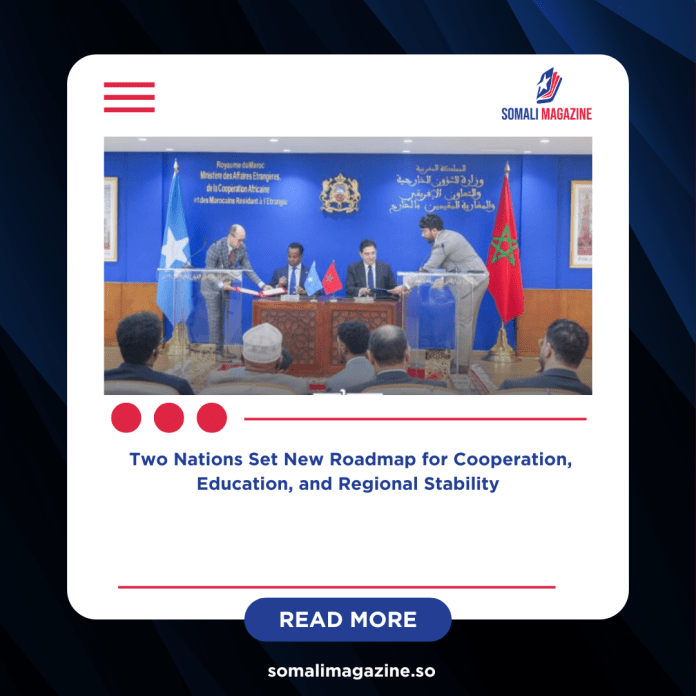
Following their talks, the two ministers signed a joint communiqué that highlighted the steady progress of bilateral relations and the shared intention to deepen cooperation across multiple sectors. Both sides emphasized their desire to build a modern, forward-looking partnership grounded in mutual solidarity, stability, and aligned political interests. They also acknowledged that the evolving relationship between the two countries has the potential to contribute to regional security and development.
One of the major outcomes of the meeting was the signing of a cooperation roadmap covering the years 2026 to 2028. This roadmap aims to expand collaboration in fields that are essential to national development, such as agriculture, maritime fisheries, renewable energy, tourism, higher education, and professional training. By focusing on these areas, both governments hope to stimulate economic growth, create opportunities for young people, and strengthen institutions in ways that benefit citizens of both nations.
A significant highlight was Morocco’s decision to substantially increase the number of scholarships offered to Somali students. Minister Bourita announced that Morocco will now provide 120 scholarships each year to support Somali students pursuing university degrees, technical training, and professional studies. This initiative is expected to boost educational exchange between the two countries and help Somalia address its need for skilled professionals in key sectors.
The diplomatic engagements continued on Thursday, when Morocco’s Head of Government, Aziz Akhannouch, met with Somali Prime Minister Hamza Abdi Barre. During the meeting, Akhannouch reiterated Morocco’s unwavering support for Somalia’s sovereignty, unity, and stability. He underlined that King Mohammed VI is committed to advancing cooperation with Somalia and sees the relationship as strategically important for both countries. According to a statement from the Moroccan government, the Prime Minister assured the Somali leader that Morocco will continue supporting efforts aimed at strengthening peace and ensuring the full territorial integrity of the Federal Republic of Somalia.
Somalia’s Prime Minister Hamza Abdi Barre echoed these sentiments during his remarks following the meeting. He stressed that his discussions with Akhannouch focused on creating new opportunities for collaboration, particularly in trade, investment, and political coordination. He noted that both nations are eager to broaden their ties and explore new areas where they can work together to promote development and long-term stability.
Overall, the visit highlighted a deepening partnership built on shared values, mutual respect, and a common desire to contribute to regional peace. By renewing their support for each other’s sovereignty and outlining clear plans for cooperation, Somalia and Morocco signaled that their relationship is entering a stronger and more structured phase that will benefit both governments and their people.