
Facebook

Twitter (X)

Instagram

Somali Magazine - People's Magazine
Somalia’s Ministry of Health has announced that it is closely watching the spread of the Marburg virus after Ethiopia confirmed several cases in the Jinka area. Although Somalia has not recorded any infections, health authorities say they are taking the situation seriously because of the virus’s high fatality rate and the close movement of people across the region.
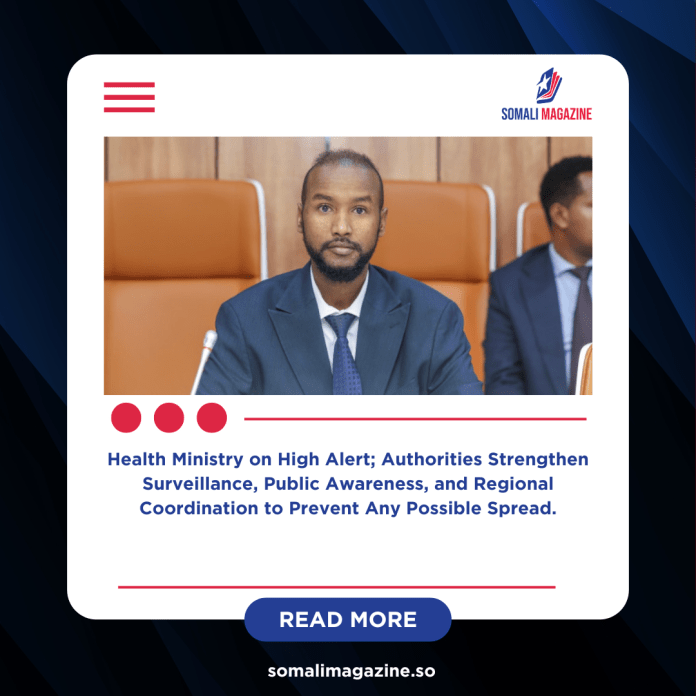
Deputy Minister of Health Dr. Mohamed Hassan Mohamed said on Sunday that the government has already activated emergency preparedness measures through the National Institute of Health. He emphasized that even though no cases have been detected in Somalia so far, staying alert is essential to protect the population and prevent the virus from entering the country.
According to the Ministry of Health, several preventive steps are now underway. These include strengthening surveillance systems at health facilities and border points, improving monitoring tools, and preparing rapid-response teams who can quickly investigate any suspected cases. Authorities are also focusing on community awareness campaigns to help the public understand the symptoms of the Marburg virus, how it spreads, and the importance of early reporting. Clear messaging is being developed to ensure communities know where to seek help and how to reduce risk.
Dr. Mohamed also acknowledged Ethiopia’s transparency in reporting its cases. He said that fast and open communication between countries is essential during infectious disease threats because viruses do not respect borders. By sharing information early, countries can coordinate responses, support each other, and act quickly enough to prevent wider outbreaks. He added that Somalia will continue to stay in close contact with Ethiopia, regional health partners, and the World Health Organization (WHO) as the situation develops.
Somalia’s preparedness efforts are guided by recent experiences in the region. Ethiopia is currently dealing with its first confirmed Marburg outbreak, which began in November 2025. This has placed pressure on local health systems, especially in areas with limited resources. Rwanda also faced a major outbreak in late 2024 that became one of the largest recorded in the world. Many healthcare workers were affected, highlighting the need for strong protective measures and rapid response strategies. Rwanda’s response included contact tracing, strict isolation of suspected and confirmed cases, and supportive medical care. It also deployed experimental vaccines and treatments as part of a controlled emergency response.
These regional outbreaks have raised concerns because the Marburg virus is highly infectious and can spread quickly through bodily fluids. Symptoms often start suddenly with high fever, severe headache, fatigue, and muscle pain. As the illness progresses, it can lead to internal bleeding, organ failure, and in many cases, death. There is no approved cure, but early medical care can significantly improve survival chances. Because of these risks, Somalia’s health authorities say preparedness is not optional—it is a responsibility.
Dr. Mohamed stressed that the safety of the Somali people remains the government’s top priority. He said that the Ministry of Health will continue to work around the clock, build stronger health systems, and improve coordination with WHO offices and regional partners. The government aims to ensure that if the virus appears within Somalia’s borders, health workers are equipped, the public is informed, and emergency systems can respond immediately.
As part of the preparedness plan, the Ministry of Health is urging communities to stay updated through official channels, avoid misinformation, and follow public health advice. Authorities expect to release frequent updates as they monitor the situation in neighboring countries. While there is no confirmed threat inside Somalia yet, officials say that early action is the key to preventing the spread of dangerous viruses like Marburg.
The future steps will depend on how quickly the stabilization force can be organized, whether all parties cooperate with its deployment, and how negotiations progress in the months ahead. For now, the resolution stands as one of the strongest international signals calling for a permanent ceasefire, rebuilding efforts, and a political process that could eventually lead to lasting peace in the region.