Facebook

Twitter (X)

Instagram

Somali Magazine - People's Magazine
The European Union (EU) has announced €250,000 (about Sh40 million) in emergency humanitarian aid to support Kenyan communities struggling with overlapping crises caused by drought, flooding, food shortages, and disease outbreaks. In a statement released on Tuesday, the EU said the contribution responds to Kenya’s worsening humanitarian situation, where climate shocks and public health threats continue to intensify at the same time.
Kenya is facing one of its toughest seasons in recent years. Prolonged drought has dried up water sources in many arid and semi-arid areas, while recent heavy rains have brought destructive flooding and landslides. These combined events have devastated farms, killed livestock, and disrupted livelihoods, leaving families with fewer ways to earn an income or feed themselves.
More than 1.8 million people across the country are already experiencing acute food insecurity, and that number is expected to rise to 2.1 million by January 2026. The lack of water has made malnutrition worse, especially for children, pregnant women, and breastfeeding mothers. Currently, around 741,000 children and over 100,000 pregnant or lactating women are at risk of acute malnutrition.
At the same time, disease outbreaks are adding to the crisis. Cholera cases are rising in Narok and Nairobi counties, and Narok has reported a 9 percent case fatality rate, which is considered high. Communities in drought-hit regions are also vulnerable to waterborne diseases and infections that spread more easily when sanitation is weakened and clean water is scarce.
Humanitarian organisations say that the situation is complicated by shrinking financial resources. With competing global emergencies, funding for response efforts in Kenya has declined, making it more difficult to sustain lifesaving programs such as food assistance, nutrition support, and health services. This shortfall has left vulnerable families even more exposed as the crises deepen.
To help fill the gap, the EU’s funding will be channelled through the Disaster Response Emergency Fund (DREF), which is managed by the International Federation of Red Cross and Red Crescent Societies (IFRC). The money will support the Kenya Red Cross Society (KRCS) in delivering immediate, practical help to the communities most affected.
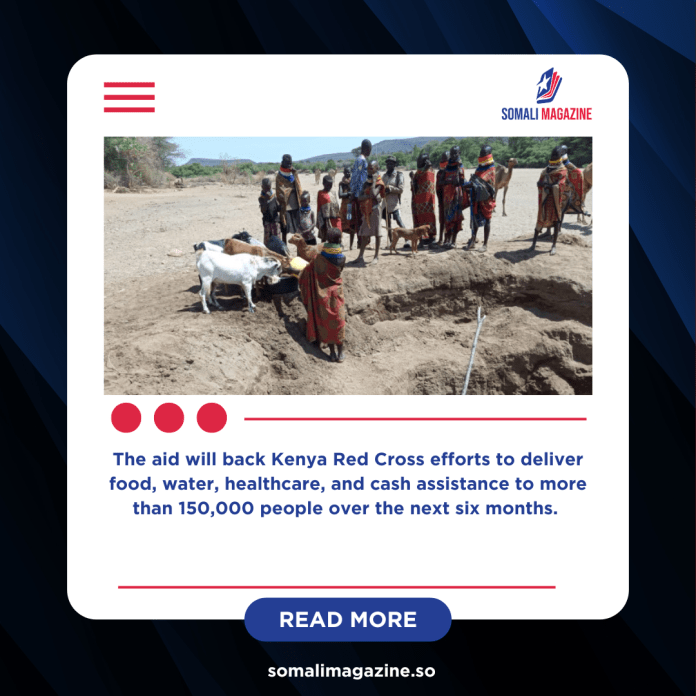
According to the EU, the contribution will enable KRCS teams to provide food assistance, clean water, cash transfers for basic needs, essential healthcare, and protection services. These interventions aim to offer rapid relief to those struggling under the combined pressure of hunger, disease, and harsh weather conditions.
The emergency programme will run for six months, ending in May 2026, and is expected to reach over 150,000 people. KRCS responders will focus on the hardest-hit regions, especially areas where drought and floods have occurred back-to-back, leaving families with little time or resources to recover.
This latest EU support is part of a long-standing partnership with the IFRC. Earlier this year, the European Commission signed a €16 million agreement to help replenish the DREF. Established in 1979, the DREF provides quick and flexible funding for small- and medium-scale emergencies, allowing national Red Cross societies to respond immediately without waiting for international fundraising appeals.
Humanitarian agencies say that such support is crucial at a time when Kenya is facing multiple crises at once. By combining emergency food assistance, health services, and help with water and sanitation, the programme aims to reduce suffering while giving communities a chance to rebuild and prepare for future shocks.