
Facebook

Twitter (X)

Instagram

Somali Magazine - People's Magazine
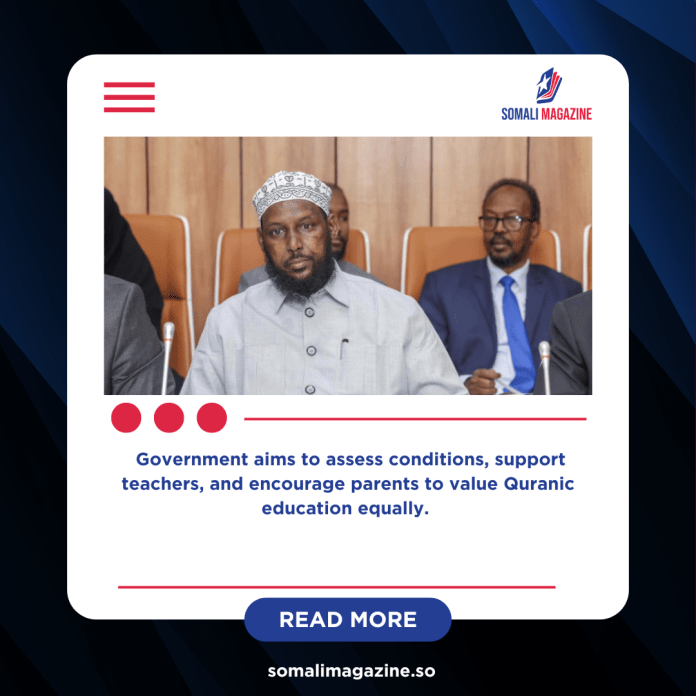
The Somali Ministry of Endowments and Islamic Affairs has launched a nationwide census of Quranic schools to better understand the conditions under which thousands of Somali children study. The ministry says many of these schools operate in environments that are not suitable for learning, and the government wants to gather accurate information so it can improve the situation.
Minister of Endowments and Islamic Affairs, Sheikh Mukhtar Robow Ali, explained that the census will help the ministry assess the current state of the schools, identify their needs, and determine how to provide support. He noted that concerns have been raised in recent months about the locations, structures, and overall conditions of many Quranic centers. These concerns motivated the ministry to take action and begin a formal review.
According to the minister, even President Hassan Sheikh Mohamud mentioned the issue during a meeting with Somali scholars, pointing out that some Quranic schools are based in areas that are not appropriate for children’s education. Because of this, the ministry aims to evaluate not only the physical conditions of the learning spaces but also the situation of the teachers who work there. By understanding their challenges and needs, the government hopes to create a plan that will eventually make Quranic education safer, stronger, and more organized across the country.
Minister Robow also explained that there is currently no official budget dedicated to Quranic schools. Despite this, he stressed that the Somali government intends to help as much as possible. He said that while financial limitations exist, the government recognizes the importance of Quranic education in Somali society and wants to take steps toward improving its quality. The census, therefore, is seen as the first essential step toward long-term reform.
During his remarks, the minister delivered a strong message to parents about how they treat children who attend Quranic schools compared to those who go to formal secular schools. He expressed concern that some families send their children to Quranic classes wearing old or worn-out clothing, while children attending regular schools are provided with clean and well-prepared outfits. He argued that this kind of difference sends the wrong message to children and undermines the value of Quranic education. According to him, all children deserve equal respect and dignity, regardless of the type of school they attend.
Minister Robow encouraged parents to recognize the importance of Quranic learning and to treat their children with the same level of care and preparation, whether they are attending religious or formal academic institutions. He emphasized that valuing a child’s education means valuing their confidence, comfort, and self-respect. For this reason, he called on families across Somalia to be more mindful and supportive.
The federal government has been repeatedly urged by religious leaders, community elders, and citizens to reform and strengthen the Quranic school system. These schools play a central role in Somali culture, but many of them lack proper classrooms, teaching materials, sanitation facilities, and trained instructors. By conducting the nationwide census, the ministry hopes to gather enough information to design practical solutions, improve school environments, and ensure that every child studying the Quran does so in a place that is safe and supportive.
The government believes that the findings from the census will help set the foundation for long-term development. Once the ministry completes the assessment, it plans to begin organizing the information and determining what kind of support each region and school requires. Although major changes will take time, officials say this initiative marks an important move toward ensuring that Quranic education in Somalia receives the recognition and resources it deserves.