
Facebook

Twitter (X)

Instagram

Somali Magazine - People's Magazine
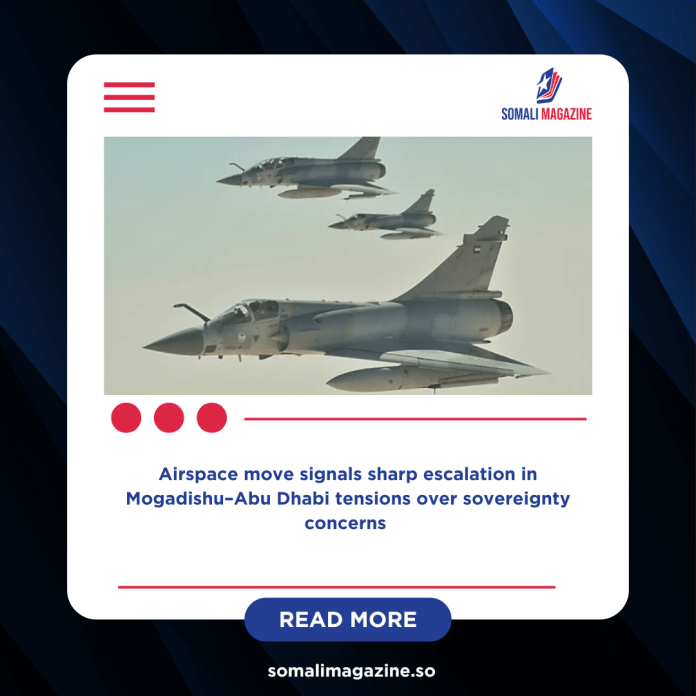
Somalia has reportedly barred military and cargo aircraft owned or leased by the United Arab Emirates from using its airspace, a move that marks a serious escalation in the already strained relationship between Mogadishu and Abu Dhabi. The decision, which came into effect on January 8, is being described by security and diplomatic sources as one of the strongest actions Somalia has taken against the UAE since the two countries began security cooperation years ago.
According to media reports quoting Somali security officials, the ban was prompted by allegations that the UAE transported Aidarus al-Zubaidi, the leader of Yemen’s Southern Transitional Council, through Somali territory without seeking approval or informing Somali authorities. Somali officials reportedly viewed this as a violation of national sovereignty and airspace regulations, particularly given the sensitivity of regional security and ongoing conflicts in the Horn of Africa and the Middle East.
Sources said that after the issue emerged, Abu Dhabi asked for a grace period to allow both sides to manage the situation and prevent a full-blown diplomatic crisis. However, the Somali government reportedly rejected the request and chose to immediately enforce the ban. Officials in Mogadishu are said to have viewed firm action as necessary to assert control over Somalia’s airspace and send a clear political message.
Reports indicate that at least one Emirati military or cargo aircraft violated the ban twice after it came into force, once on Friday and again on Saturday. This reportedly angered Somali authorities, who then warned that additional measures could follow if the restrictions were not respected. While details of potential further steps remain unclear, the warnings suggest Somalia is prepared to take a tougher stance if it believes its decision is being ignored.
At the same time, Somali authorities are said to have approved a limited number of exception flights. These included several evacuation flights from Bosaso Airport and Mogadishu’s main airport, aimed at allowing the orderly withdrawal of Emirati forces and military equipment from the country. Sources emphasized that these exemptions were strictly controlled and did not signal a reversal of the broader ban.
Somali officials have also stressed that the restrictions do not apply to civilian airlines. Commercial flights, including those operated by flydubai, are reportedly continuing as normal. This distinction appears intended to limit the economic and humanitarian impact of the dispute while keeping pressure focused on military and security-related activities.
Observers say developments on the ground point to a gradual dismantling of the UAE’s military presence in Somalia. For years, Abu Dhabi played a role in training and supporting certain Somali security units, but that relationship has been tense, especially after earlier disputes over sovereignty, ports, and foreign military involvement. The airspace ban is now being seen as a turning point that reflects an unprecedented level of mistrust between the two governments.
The situation is also unfolding against a wider regional backdrop. Earlier this month, media reports claimed that Saudi Arabia imposed its own restrictions on Emirati military cargo aircraft transiting Saudi airspace. Those reports alleged that Emirati planes carrying weapons and equipment, allegedly intended for Sudan’s Rapid Support Forces via Libya, were forced to seek alternative routes. According to the same reports, some flights began traveling through Somaliland, then Ethiopia, before heading to Chad and onward to Libya.
While these claims have not been independently confirmed, they add to the sense of growing scrutiny over military air movements in the region. They also highlight how Somalia’s reported decision fits into a broader pattern of shifting alliances and rising tensions among key regional players.
So far, neither the Somali government nor Emirati authorities have issued an official public statement confirming or denying the reported airspace ban. The lack of formal communication has left much of the information in the realm of security sources and media reports. Nonetheless, the reported measures underscore how fragile relations between Somalia and the UAE have become, and how questions of sovereignty, security, and regional politics continue to shape decisions in Mogadishu.