Facebook

Twitter (X)

Instagram

Somali Magazine - People's Magazine
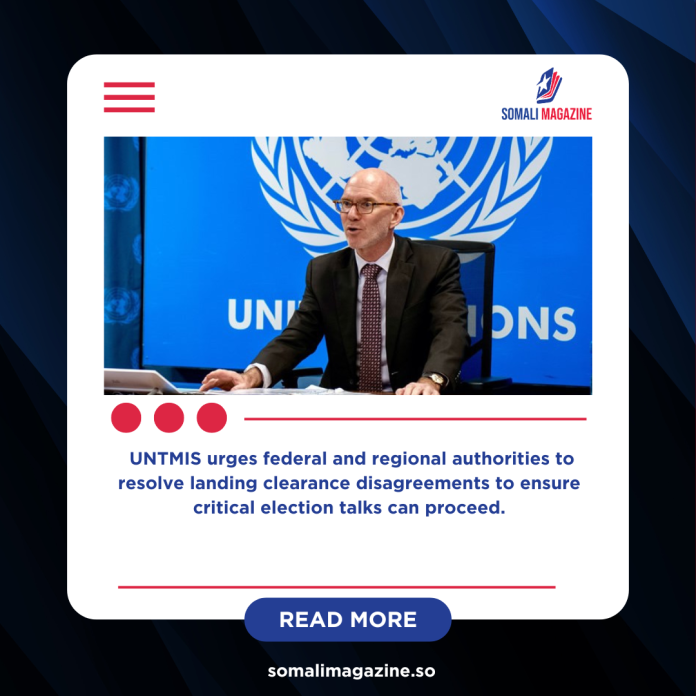
The United Nations has stepped in to call for calm and cooperation in Somalia after a serious security disagreement blocked regional leaders from reaching the capital for important talks. On Sunday, the United Nations Transitional Assistance Mission in Somalia (UNTMIS) urged the federal government and regional heads to prioritize dialogue over division. This appeal comes at a tense moment as the country prepares for a national consultative forum meant to settle long-standing disputes regarding elections and governance.
The tension peaked when the federal government refused to grant landing clearance at Mogadishu’s Aden Adde International Airport for two planes carrying advance security teams for the presidents of Puntland and Jubaland. Because these technical clearances were denied, the preparatory delegations were unable to arrive, effectively stalling the planned discussions. The UN mission expressed regret over the situation, noting that such delays hinder the country’s progress. They encouraged all parties to work quickly to finish the necessary technical preparations and to create an environment where leaders can meet safely and reach a meaningful agreement.
The federal government defended its decision by citing strict security protocols. According to the Ministry of Interior, the aircraft were carrying a large number of armed personnel and weapons that violated the rules established to keep the capital and its international airport safe. Officials argued that the restrictions were necessary to maintain public order and protect the security gains the city has made recently. The government emphasized its constitutional duty to ensure that no uncoordinated armed movements take place in Mogadishu, stating that any such actions would be viewed as a threat to national sovereignty.
To facilitate the meeting, federal authorities had previously agreed to allow each regional president a specific security detail, consisting of thirty uniformed guards and ten plainclothes officers. However, they accused the leadership of Puntland and Jubaland of trying to bring in more than 100 security personnel each. The government warned that it would not allow the use of force or the threat of force to influence political goals, insisting that all visiting delegations must stick to the agreed-upon limits to prevent any potential instability in the capital.
This standoff highlights the deep lack of trust between the central government and the semi-autonomous regions. International partners are increasingly worried that these types of disagreements could derail the fragile political transition Somalia is currently navigating. With key constitutional deadlines approaching, the pressure is mounting for the federal government and regional states to find common ground. The UN’s message was clear: the future of the country depends on leaders sitting down at the table and resolving their differences through negotiation rather than through displays of force or administrative roadblocks.
As the situation remains at a standstill, the focus remains on whether both sides can agree on security arrangements that satisfy everyone. The goal is to get the national consultative forum back on track so that Somalia can move forward with its electoral process. For now, the international community is watching closely, hoping that the federal government and regional leaders can overcome this latest impasse and focus on the national interest.