
Facebook

Twitter (X)

Instagram

Somali Magazine - People's Magazine
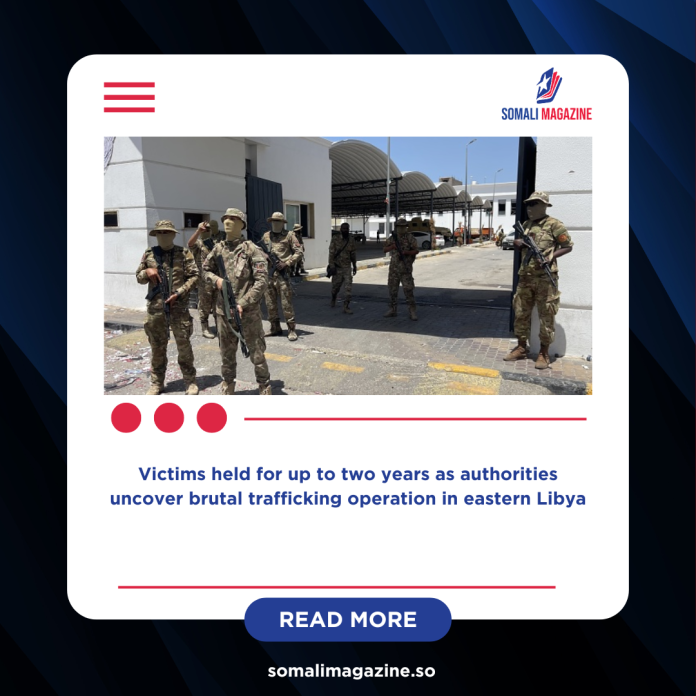
Libyan security forces have rescued more than 200 migrants from a secret underground detention site in the southeastern town of Kufra, exposing yet another disturbing case of abuse linked to human trafficking networks operating in the region. The migrants were found held in harsh and degrading conditions inside an improvised prison hidden beneath the ground.
According to security officials, the detention site was located nearly three meters underground and consisted of several small cells with little or no ventilation or light. The facility was allegedly run by a Libyan trafficker and had been operating out of public view for a long period. Some of the rescued migrants had reportedly been confined in the underground cells for as long as two years, enduring severe physical and psychological suffering.
Officials who spoke anonymously said the conditions inside the site were extremely inhumane. Detainees were kept in cramped spaces, deprived of basic needs, and subjected to cruel treatment. One security official described the discovery as one of the most serious crimes against humanity uncovered in the area, saying it revealed the extreme levels of cruelty faced by migrants along trafficking routes in eastern Libya.
The rescued group included women and children and was made up mainly of migrants from sub-Saharan Africa, particularly Somalia and Eritrea. Many of them had traveled through dangerous desert routes hoping to reach Libya’s northern coast and eventually cross the Mediterranean Sea to Europe. Instead, they fell into the hands of traffickers who exploited their vulnerability.
Kufra, located about 1,700 kilometers southeast of Tripoli, has long been a major transit point for migrants crossing the Sahara. Its remote desert location and weak security presence have made it a hotspot for smuggling and human trafficking operations. Over the years, the town has become closely linked to reports of abuse, illegal detention, and deaths of migrants.
Authorities said the suspected trafficker behind the underground prison has not yet been arrested, but investigations are ongoing. Security forces are continuing operations in the area in an effort to dismantle trafficking networks and identify others involved in running illegal detention sites.
The rescue comes amid growing evidence of widespread abuse against migrants in eastern Libya. Just days before this operation, officials reported the discovery of at least 21 migrant bodies in a mass grave in the same region. Survivors rescued from captivity showed clear signs of torture, according to security sources. These findings point to a pattern of extreme violence and exploitation faced by migrants moving through the area.
Earlier incidents further highlight the severity of the crisis. In February last year, Libyan authorities recovered 39 bodies from dozens of mass graves in and around Kufra. Those discoveries shocked the nation and drew international attention to the deadly risks faced by migrants traveling through Libya’s desert routes.
The situation in Kufra has also been complicated by the arrival of tens of thousands of Sudanese refugees who fled the conflict that erupted in Sudan in 2023. The sudden population increase has put pressure on local resources and security systems, making it more difficult to control criminal activities in the area.
International human rights organizations have repeatedly warned about the treatment of migrants in Libya, documenting cases of arbitrary detention, forced labor, torture, and sexual abuse. They have called on Libyan authorities and the international community to strengthen accountability, protect vulnerable migrants, and address the root causes that allow trafficking networks to operate freely.
Libyan officials said the rescued migrants have been transferred to care facilities where they are receiving medical treatment and humanitarian assistance. However, details about their long-term protection, legal status, or possible return to their home countries were not immediately made public. For many survivors, the rescue marks the end of a long period of suffering, but their future remains uncertain as Libya continues to grapple with the ongoing migrant crisis.