
Facebook

Twitter (X)

Instagram

Somali Magazine - People's Magazine
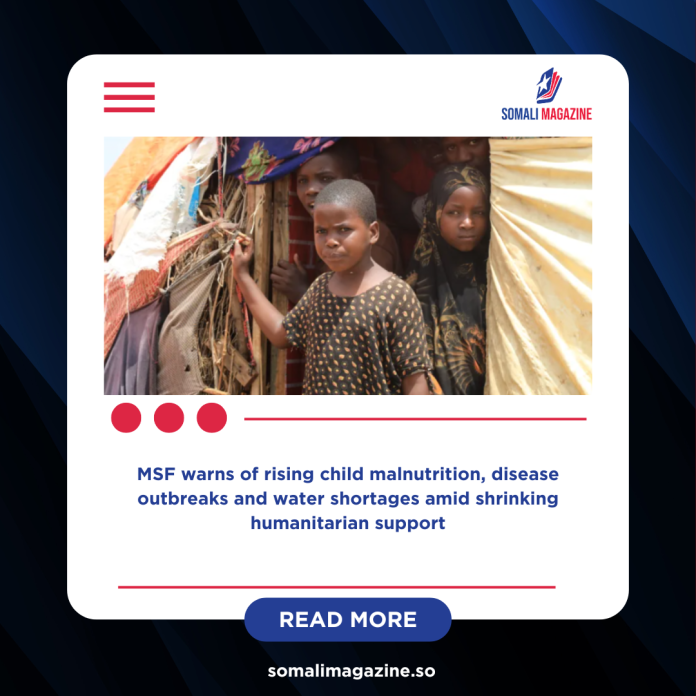
Somalia is sliding deeper into a serious health and nutrition crisis as repeated droughts, rising water prices and major cuts to humanitarian aid push millions of people to the brink. Doctors Without Borders (MSF) has warned that the situation is rapidly worsening, with growing numbers of children suffering from severe malnutrition and preventable diseases such as measles, diphtheria and acute watery diarrhoea.
According to MSF, its medical teams across the country are seeing an alarming increase in children arriving at hospitals in critical condition. Many of these children come from overcrowded displacement camps after travelling for days without enough food or clean water. MSF staff say the combination of hunger, dehydration and weak immunity is leaving children extremely vulnerable to illness and death.
Somalia’s government declared a drought emergency in November, but aid agencies say the response has been slow and underfunded. Humanitarian support has fallen to its lowest level in a decade, even as needs continue to rise. MSF officials say the drought has destroyed not only water sources and farmland but also the fragile systems families depend on to survive.
Somalia is one of the countries most exposed to climate shocks, facing cycles of droughts and floods that have intensified in recent years. After four failed rainy seasons, United Nations assessments warned that by the end of 2025, around 4.4 million people could face crisis-level or worse food shortages. Among them are an estimated 1.85 million children under the age of five who are at risk of acute malnutrition.
The crisis has forced more than 3.3 million people to flee their homes. Many are now living in crowded camps in areas such as Baidoa in the southwest and Mudug in central Somalia. These camps often lack adequate water, sanitation and healthcare, creating ideal conditions for disease outbreaks.
Despite the growing needs, the humanitarian response has been shrinking. Since early 2025, more than 200 health and nutrition facilities have closed across the country. Food assistance has also dropped sharply, from reaching about 1.1 million people each month to only around 350,000. In Baidoa alone, MSF recorded a 48 percent increase in admissions for severe acute malnutrition in October compared to the previous month. During the same period, nearly 200 children were treated for suspected measles, most of whom had never received a vaccine. In Mudug, admissions to inpatient feeding centres rose by more than a third.
Water shortages are making the situation even worse. In displacement camps, clean water is scarce and expensive. A 200-litre barrel now costs between $2.50 and $4, far beyond what many families can afford. Mothers in the camps say they are forced to choose between buying water and buying food. Some families resort to using salty or unsafe water, which often leads to diarrhoea and other illnesses, especially among children.
Many families have been displaced multiple times over the years due to floods, conflict and drought. Parents describe watching their children grow weaker as hunger and disease take hold, with little access to medical care or clean water.
To respond to the immediate shortages, MSF began emergency water trucking in Baidoa in December. By mid-January, the organisation had delivered millions of litres of safe drinking water and installed water storage systems and solar lighting. However, aid workers say these efforts are not enough given the scale of the crisis and the harsh dry season now underway.
MSF has described the situation as unacceptable, stressing that it is both predictable and preventable. The organisation is calling on donors and authorities to urgently increase funding for nutrition programmes, vaccination campaigns and water services. It also urges long-term investment in climate-resilient water systems and sustained support for essential healthcare. Without a strong, coordinated response, MSF warns that deaths from hunger and preventable diseases will continue to rise in the coming months.