Facebook

Twitter (X)

Instagram

Somali Magazine - People's Magazine
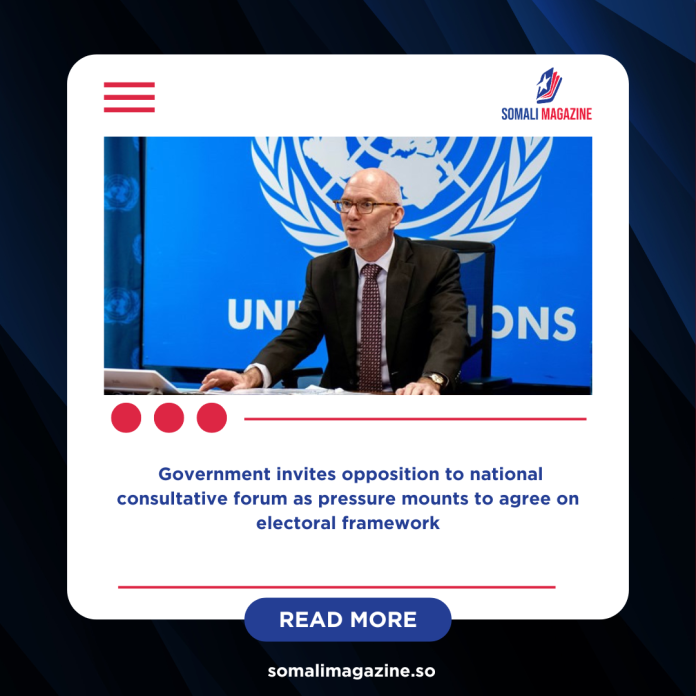
The UN Transitional Assistance Mission in Somalia (UNTMIS) has welcomed the Somali federal government’s move to convene a national consultative forum and formally invite the Somali Future Council, a key opposition alliance, to participate in discussions as political tensions rise over the country’s electoral process. The decision comes at a critical time, with constitutional deadlines approaching and growing concern over the lack of agreement on how and when elections should be held.
In a statement released on Wednesday, UNTMIS reaffirmed its strong support for inclusive political dialogue, stressing the need for broad consensus on participatory and transparent elections before current constitutional mandates expire. The mission emphasized that open engagement among all political stakeholders is essential to maintaining stability and protecting Somalia’s ongoing political transition. It also encouraged the Somali Future Council to respond positively to the government’s invitation and urged all sides to take part in the talks in a constructive and solution-focused manner.
International partners have echoed similar sentiments. The United Kingdom welcomed the federal government’s initiative, describing the planned forum as a meaningful step toward easing political tensions and strengthening national stability. In a statement, the British Embassy in Somalia said it supports the announcement of an inclusive national consultative conference scheduled to take place in Mogadishu in February. The embassy encouraged the opposition to join the process and called on all parties to work together to reach an agreement on elections that would support Somalia’s long-term stability and prosperity.
The Somali federal government has confirmed that the national conference will open on February 1 in Mogadishu and is expected to run for several days. Officials say the talks will focus on accelerating discussions around the country’s political direction, with particular attention on electoral arrangements. The government has warned that without timely agreement, Somalia could face a serious constitutional and political impasse that may disrupt governance and undermine recent progress.
According to government statements, the conference is intended to strengthen national unity and social cohesion by creating space for dialogue, compromise, and mutual understanding. The aim is to advance a democratic process rooted in consultation, where citizens’ voices and concerns are reflected in decisions shaping the country’s future. Authorities say the forum offers an opportunity to resolve disagreements peacefully and prevent further polarization.
The invitation to the Somali Future Council follows an opposition-led meeting held last month in Kismayo. During that gathering, opposition leaders called on President Hassan Sheikh Mohamud’s administration to organize inclusive talks by January 20. They urged the government to address key unresolved issues, including the choice of electoral model, the election timeline, and the mechanisms needed to reach a political settlement acceptable to all stakeholders.
Opposition figures have repeatedly warned that delays, lack of consultation, or unilateral decisions regarding elections could deepen political divisions and increase the risk of instability. They argue that without consensus, the credibility of the electoral process could be questioned, potentially reversing gains made in governance and security over recent years.
The federal government has responded by insisting that dialogue remains the best and only viable path forward. Officials maintain that continued engagement with political actors, including opposition groups, is essential to resolving disputes and safeguarding Somalia’s fragile transition toward a more stable and democratic system.
As constitutional deadlines draw closer, Somalia is facing increasing pressure from both domestic actors and the international community to agree on a clear and credible election framework. Many observers warn that failure to reach consensus could undermine security gains, weaken public trust, and slow broader state-building efforts. Against this backdrop, the proposed national consultative forum is being viewed as a critical opportunity to bridge differences and steer the country away from political uncertainty.