
Facebook

Twitter (X)

Instagram

Somali Magazine - People's Magazine
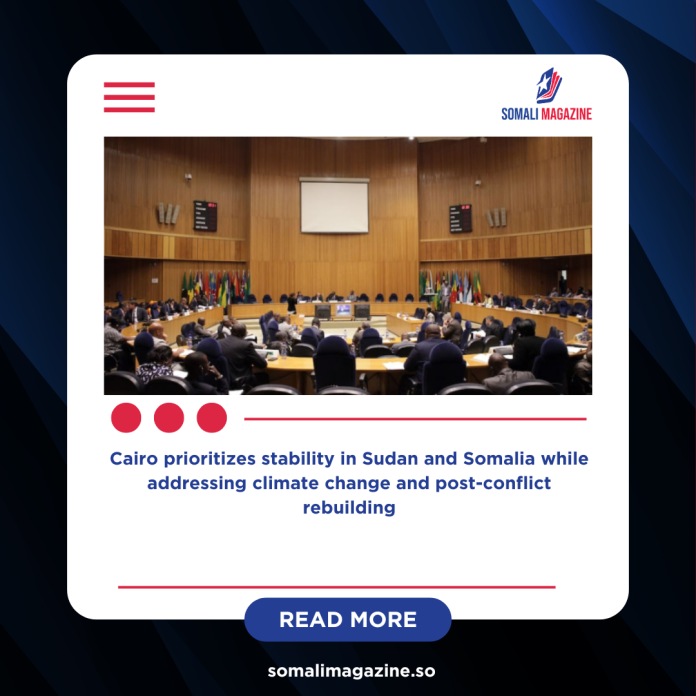
On February 1, Egypt officially took over the rotating presidency of the African Union’s Peace and Security Council. This one-month leadership term begins at a critical moment for the continent, as many nations struggle with a complex web of overlapping crises. In a recent statement, the Egyptian Ministry of Foreign Affairs highlighted that the region is currently grappling with a variety of difficult issues, including active armed conflicts, unstable political transitions, widespread food shortages, and the growing pressures of climate change. During its time at the helm, Cairo has pledged to prioritize these urgent matters, with a specific focus on finding solutions for the ongoing and deeply rooted instability in Sudan and Somalia.
To address these concerns, Egypt has designed a busy diplomatic schedule that centers on direct dialogue. The agenda includes hosting informal ministerial talks with Sudan’s foreign minister and organizing dedicated sessions to evaluate the specific security situations in both Sudan and Somalia. By focusing on these two nations, Egypt hopes to revitalize the council’s ability to intervene effectively and bring much-needed stability to East Africa. The broader goal is to improve how the African Union manages peace and security by linking these issues directly to good governance. Egypt believes that by strengthening the way the council operates, it can better help member states resolve their internal disputes and stay on track with “Agenda 2063,” the African Union’s long-term plan for economic and social development.
Egypt’s approach during its presidency will be rooted in the core values of the African Union’s Constitutive Act. This means that Cairo will place a heavy emphasis on respecting the sovereignty and territorial borders of every nation, protecting the strength of national institutions, and ensuring that there is no outside interference in the internal affairs of member states. These principles are often the subject of intense debate within the council, but Egypt views them as essential foundations for lasting peace.
Beyond the immediate crises in Sudan and Somalia, the Egyptian presidency plans to explore how modern challenges affect the safety of African citizens. The council will hold specialized sessions to discuss how climate change creates new security risks and the potential impact of artificial intelligence on the continent. Furthermore, the delegation will lead discussions on how to rebuild countries after a war has ended—a specific area of expertise that Egypt currently leads within the African Union. This focus on post-conflict reconstruction aims to ensure that once peace is achieved, it is supported by strong infrastructure and a stable economy so that violence does not break out again.
As the month progresses, Egyptian officials will also be responsible for representing the council on the global stage. The delegation is set to present a comprehensive report on the council’s recent activities at the upcoming summit for African heads of state. To make sure their efforts are well-coordinated, Egyptian leaders plan to conduct field visits and hold consultations with various regional and international partners. By doing so, they hope to create a more unified front in the fight against instability. Ultimately, Egypt’s goal for its presidency is to move beyond temporary fixes and instead foster a more secure, self-reliant, and prosperous Africa through cooperation and a renewed commitment to the council’s mission.