Facebook

Twitter (X)

Instagram

Somali Magazine - People's Magazine
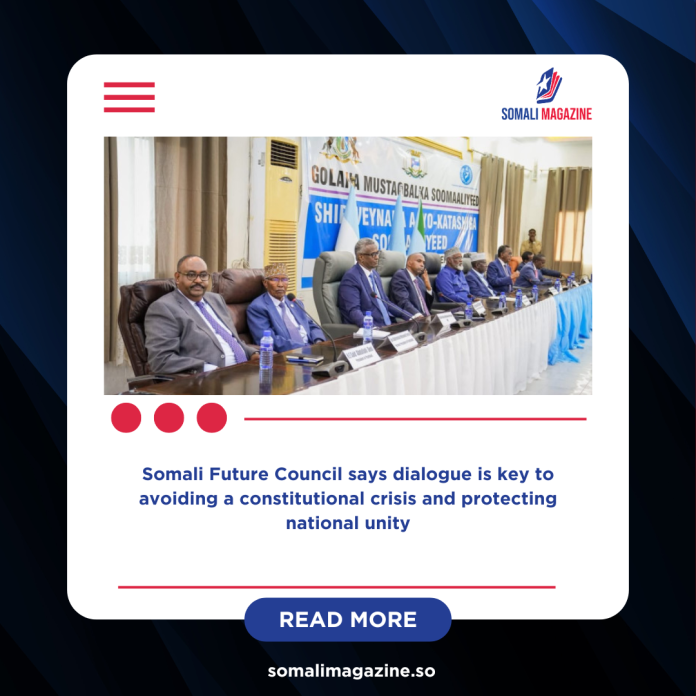
Somalia’s main opposition coalition, the Somali Future Council, has agreed to take part in a federal government–led consultative conference in Mogadishu, signaling a possible opening toward resolving the country’s worsening political and electoral deadlock. The decision comes at a time when Somalia is facing mounting uncertainty, with unresolved constitutional disputes and delayed electoral processes raising fears of instability and institutional paralysis.
In a statement issued on Saturday, the Council said it chose dialogue over boycott in order to prevent a constitutional vacuum and to push for a broad, inclusive political agreement that protects Somalia’s unity and sovereignty. The opposition alliance stressed that while it has serious concerns about the current political direction, staying away from talks could further weaken the state and deepen divisions at a critical moment.
The Council warned that Somalia is entering a fragile phase, where prolonged political disputes could threaten territorial integrity and social cohesion. It noted that continued deadlock risks creating opportunities for extremist groups such as al-Shabab and the Islamic State group to exploit uncertainty and regain lost ground. According to the opposition, political infighting not only distracts leaders from urgent national priorities but also undermines public trust in state institutions.
Describing the situation as a serious test for the country’s leadership, the Somali Future Council urged all political actors to act with restraint and responsibility. It emphasized that decisions made in the coming period could either strengthen Somalia’s statehood or push it further into instability. The alliance said its participation in the conference should be seen as an effort to place national interest above political rivalry.
However, the opposition made it clear that its attendance is not unconditional. It said the talks must be held in an environment of trust, goodwill, and genuine dialogue, rather than being used to legitimize unilateral decisions. The Council specifically called on President Hassan Sheikh Mohamud to pause the ongoing process of amending the provisional constitution adopted in 2012, arguing that constitutional changes should only happen through broad consensus and inclusive consultation.
The Somali Future Council said the focus of the conference should be on the country’s most pressing challenges. These include national security, particularly the continued fight against al-Shabab and ISIS, which remain a major threat despite recent military gains. The opposition also stressed the need to reach a clear and agreed-upon electoral framework for federal institutions, warning that delays and disagreements over elections could trigger a political crisis as current mandates near their end.
In addition, the Council highlighted the importance of strengthening national unity and addressing the worsening drought affecting many parts of the country. It said humanitarian concerns must not be sidelined by political disputes, noting that millions of Somalis continue to face food insecurity, displacement, and limited access to basic services.
To prepare for the talks, the opposition alliance said it has formed a technical committee to coordinate its participation. The committee will be chaired by lawmaker Abdullahi Abukar Haji, also known as Abdullahi Arab, who is expected to help shape the Council’s positions and proposals during the discussions.
The federal government, for its part, has said the consultative conference is aimed at reinforcing national unity and social cohesion. Officials say the forum is designed to promote a democratic process based on dialogue and compromise, while ensuring that citizens’ voices are reflected in decisions about Somalia’s political future.
The talks are taking place against a backdrop of increasing pressure from both within Somalia and from international partners. Diplomats and political analysts have warned that failure to agree on an election model and constitutional direction could reopen old political rifts, weaken recent security progress, and slow down broader state-building efforts.
International actors have welcomed the move toward dialogue. The United Nations Transitional Assistance Mission in Somalia, alongside the European Union and the United Kingdom, recently praised the government’s decision to convene the conference and formally invite the Somali Future Council. They described the step as a positive signal that could help reduce tensions and restore momentum to Somalia’s fragile democratic transition.
Somalia’s main opposition coalition, the Somali Future Council, has agreed to take part in a federal government–led consultative conference in Mogadishu, signaling a possible opening toward resolving the country’s worsening political and electoral deadlock. The decision comes at a time when Somalia is facing mounting uncertainty, with unresolved constitutional disputes and delayed electoral processes raising fears of instability and institutional paralysis.
In a statement issued on Saturday, the Council said it chose dialogue over boycott in order to prevent a constitutional vacuum and to push for a broad, inclusive political agreement that protects Somalia’s unity and sovereignty. The opposition alliance stressed that while it has serious concerns about the current political direction, staying away from talks could further weaken the state and deepen divisions at a critical moment.
The Council warned that Somalia is entering a fragile phase, where prolonged political disputes could threaten territorial integrity and social cohesion. It noted that continued deadlock risks creating opportunities for extremist groups such as al-Shabab and the Islamic State group to exploit uncertainty and regain lost ground. According to the opposition, political infighting not only distracts leaders from urgent national priorities but also undermines public trust in state institutions.
Describing the situation as a serious test for the country’s leadership, the Somali Future Council urged all political actors to act with restraint and responsibility. It emphasized that decisions made in the coming period could either strengthen Somalia’s statehood or push it further into instability. The alliance said its participation in the conference should be seen as an effort to place national interest above political rivalry.
However, the opposition made it clear that its attendance is not unconditional. It said the talks must be held in an environment of trust, goodwill, and genuine dialogue, rather than being used to legitimize unilateral decisions. The Council specifically called on President Hassan Sheikh Mohamud to pause the ongoing process of amending the provisional constitution adopted in 2012, arguing that constitutional changes should only happen through broad consensus and inclusive consultation.
The Somali Future Council said the focus of the conference should be on the country’s most pressing challenges. These include national security, particularly the continued fight against al-Shabab and ISIS, which remain a major threat despite recent military gains. The opposition also stressed the need to reach a clear and agreed-upon electoral framework for federal institutions, warning that delays and disagreements over elections could trigger a political crisis as current mandates near their end.
In addition, the Council highlighted the importance of strengthening national unity and addressing the worsening drought affecting many parts of the country. It said humanitarian concerns must not be sidelined by political disputes, noting that millions of Somalis continue to face food insecurity, displacement, and limited access to basic services.
To prepare for the talks, the opposition alliance said it has formed a technical committee to coordinate its participation. The committee will be chaired by lawmaker Abdullahi Abukar Haji, also known as Abdullahi Arab, who is expected to help shape the Council’s positions and proposals during the discussions.
The federal government, for its part, has said the consultative conference is aimed at reinforcing national unity and social cohesion. Officials say the forum is designed to promote a democratic process based on dialogue and compromise, while ensuring that citizens’ voices are reflected in decisions about Somalia’s political future.
The talks are taking place against a backdrop of increasing pressure from both within Somalia and from international partners. Diplomats and political analysts have warned that failure to agree on an election model and constitutional direction could reopen old political rifts, weaken recent security progress, and slow down broader state-building efforts.
International actors have welcomed the move toward dialogue. The United Nations Transitional Assistance Mission in Somalia, alongside the European Union and the United Kingdom, recently praised the government’s decision to convene the conference and formally invite the Somali Future Council. They described the step as a positive signal that could help reduce tensions and restore momentum to Somalia’s fragile democratic transition.