
Facebook

Twitter (X)

Instagram

Somali Magazine - People's Magazine
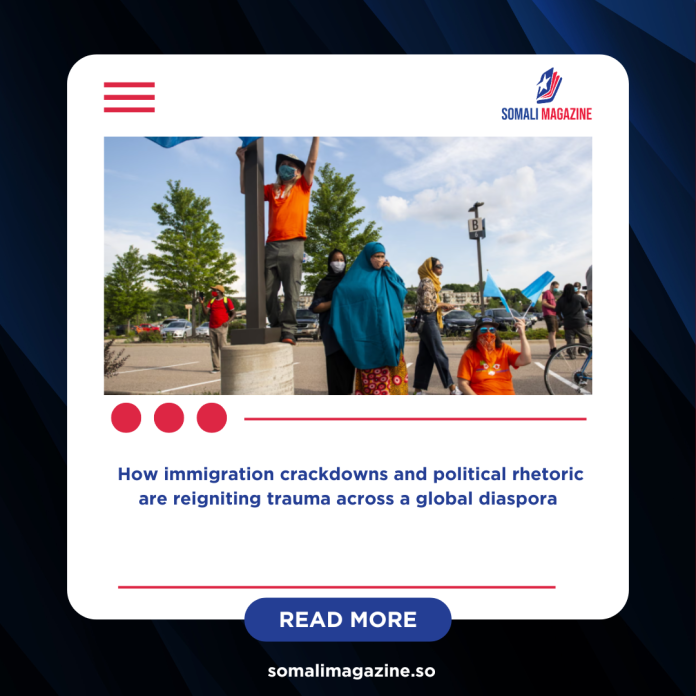
Disturbing scenes have continued to unfold on the streets of Minneapolis as confrontations between US Immigration and Customs Enforcement (ICE) officers and protesters intensify. While the headlines focus on clashes and arrests, many Somali communities in the US and across the world are experiencing this moment as deeply traumatic. For them, what is happening now reopens old wounds linked to displacement, discrimination, and fear. Conversations with Somali academics and activists in Minnesota, Mogadishu, and across the diaspora reveal a shared picture of anxiety, but also determination and resilience.
During most of his second term, Donald Trump has repeatedly targeted Somali Americans through harsh language and policy positions. He has made derogatory remarks about both the Somali community and Somalia itself, often using them to justify broader anti-immigration measures. These attacks have been especially focused on Minnesota, which is home to more than 100,000 people of Somali descent. Trump has also fixated on Congresswoman Ilhan Omar, who is of Somali origin and has openly challenged him. This hostility escalated further when Omar was attacked this week by a man who sprayed her with an unknown substance. Instead of condemning the attack, Trump dismissed it and accused her of staging it, deepening the sense of vulnerability felt by Somali Americans.
According to Professor Idil Abdi Osman of the University of Leicester, the targeting of Somalis is not accidental. She explains that in the current political climate, marked by a global shift toward right-wing populism, Somali communities have become convenient scapegoats. As Black, Muslim, and immigrant populations, they sit at the intersection of racism, Islamophobia, and anti-immigration sentiment. This makes them easy targets for political narratives built on fear and exclusion, not only in the US but also in parts of Europe.
The Somali diaspora is unusually close-knit, both emotionally and practically. Large-scale migration began after the Somali civil war in the late 1980s, meaning many families left their homeland under extreme pressure rather than choice. This has created strong bonds between Somalis abroad and those back home. Migration policies also forced many families to split across different countries, resulting in vast extended family networks spread across continents. As a result, events in one place are felt deeply everywhere.
Jawaahir Daahir, founder of Somali Development Services in the UK, explains that when something happens to a Somali family in Minnesota, relatives in Europe or Africa feel the impact immediately. She notes that political debates rarely address how policies and rhetoric affect daily life. Many families are now questioning their sense of safety and belonging. Parents worry about discrimination, while young people struggle to navigate identity in an increasingly hostile environment.
In Minnesota, these fears have led to real consequences. Some parents are reportedly afraid to send their children to school, concerned that ICE actions could put even US-born citizens at risk. Academics warn that this fear mirrors the social and emotional harm seen during the Covid-19 pandemic and adds to trauma already carried by families who once fled violence and instability.
Despite this, Somali communities are responding with solidarity. Grassroots networks are providing food, sharing resources, and supporting not only fellow Somalis but also other immigrant groups. Community centres built decades ago to help new arrivals are now assisting people from many backgrounds. These acts of care reflect a long history of mutual support.
Professor Abdi Samatar of the University of Minnesota points out that Minnesota itself has a strong tradition of welcoming immigrants. While federal policies may feel hostile, state and local communities have often shown compassion and resistance. He believes this distinction matters and sees hope in the solidarity shown by ordinary Minnesotans.
For now, the global Somali diaspora remains on edge, bracing for what may come next. Yet it draws strength from shared history, community bonds, and a deep belief in collective survival.