
Facebook

Twitter (X)

Instagram

Somali Magazine - People's Magazine
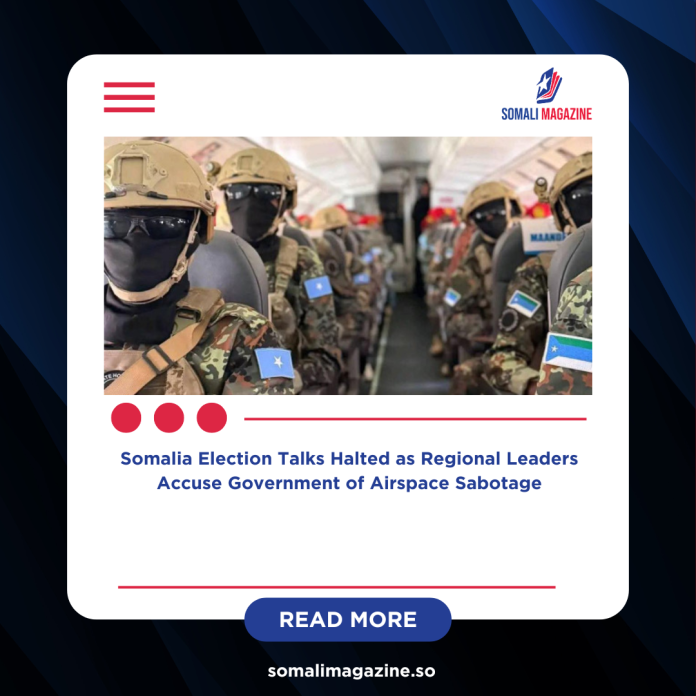
Deepening a long-standing political rift, the regional administrations of Jubaland and Puntland have accused Somalia’s federal government of blocking planes carrying their security personnel from landing in Mogadishu. The incident occurred on Sunday, just as officials were preparing for a high-level consultative conference aimed at resolving the country’s ongoing election disputes.
According to statements from both regional states, aircraft transporting advance delegations and presidential security guards were ordered to turn back by air traffic control while approaching Aden Adde International Airport. Jubaland officials expressed strong regret over the decision, noting that the flight had previously been cleared by the Civil Aviation Authority and the conference organizing committee. They highlighted the danger of the maneuver, claiming the plane was forced to return to Kismayo without confirmation that it had enough fuel for the return trip—an act they described as a “hostile decision” that put lives at risk.
Puntland issued a similar complaint regarding President Said Abdullahi Deni’s security detail. President Deni went a step further, labeling the redirection of the aircraft a criminal act and “attempted murder,” vowing that those responsible would eventually be held accountable. Both regions argue that these actions are a deliberate attempt by federal leaders to undermine the peace talks, despite the regional states accepting the invitation to participate in good faith.
The Somali Future Council, a political bloc representing these regional leaders, also condemned the move. They pointed out that while they remain open to “sincere talks,” the federal government’s recent actions—including controversial constitutional amendments and public statements—contradict the spirit of national dialogue. The council warned that it would be reviewing its participation in the electoral process moving forward.
In response, sources within the federal government defended the decision to turn the planes away. They claimed that Mogadishu was alarmed by the scale of the planned deployments, alleging that Jubaland and Puntland attempted to bring in over 100 soldiers each. Federal officials stated that a limit of 30 security personnel per regional president had been agreed upon, and they argued that allowing hundreds of outside troops into the capital would create a false impression of insecurity.
This standoff mirrors the high tensions seen during the 2021 election cycle. Ironically, during that period, current President Hassan Sheikh Mohamud was in the opposition and supported the right of regional leaders to bring large security details to the capital. Now that the roles are reversed, the same logistical disagreements have become a flashpoint for conflict.
The primary issue remains a deep lack of trust between the central government and its member states. While the federal government views the large security details as a provocation or an unnecessary show of force, the regional leaders view them as a basic requirement for their safety in a volatile environment. By blocking the arrival of these guards, the federal government has inadvertently stalled the very talks intended to stabilize the country. With both sides now trading accusations of sabotage and criminal intent, the future of the consultative conference remains uncertain. Whether a consensus on Somalia’s electoral roadmap can be reached now depends on whether both parties can move past this latest diplomatic crisis.