
Facebook

Twitter (X)

Instagram

Somali Magazine - People's Magazine
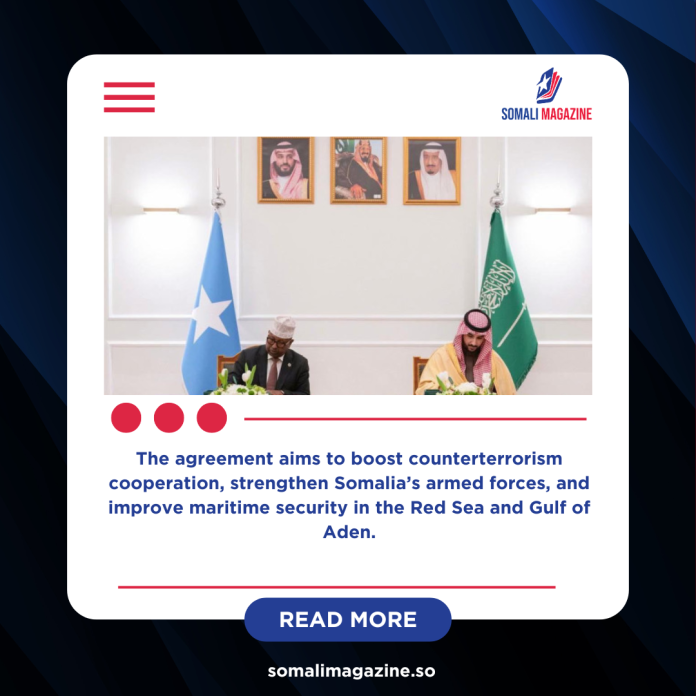
Saudi Arabia and Somalia have entered into a new military cooperation agreement aimed at strengthening defense ties between the two countries and addressing shared security concerns in the region. The deal is designed to boost Somalia’s military capabilities while also enhancing joint efforts against terrorism and improving maritime security in the Red Sea and the Gulf of Aden, areas that are critical to global trade and regional stability.
The memorandum of understanding was announced by Saudi Defense Minister Prince Khalid bin Salman alongside Somali Defense Minister Ahmed Moallim Fiqi. Officials from both sides described the agreement as an important milestone in the growing strategic relationship between Riyadh and Mogadishu. It reflects a shared view that closer cooperation is necessary to deal with security threats that extend beyond national borders and affect the wider region.
Under the agreement, Saudi Arabia will play a role in supporting the training and equipping of the Somali armed forces. This includes helping to build skills, improve operational readiness, and strengthen institutional capacity within Somalia’s defense sector. The partnership also covers expanded intelligence sharing and closer coordination on security matters, particularly in counterterrorism operations. By exchanging military expertise, defense technology, and technical support, both governments aim to create a stronger and more effective Somali defense force.
A major focus of the agreement is the fight against al-Shabab, the militant group that has posed a long-standing threat to Somalia’s security and stability. Somali officials believe that improved training, better equipment, and stronger intelligence cooperation will help their forces maintain pressure on the group and secure areas that have already been liberated. Strengthening the national army is also seen as a key step toward long-term stability and self-reliance, as Somalia works to rebuild state institutions after decades of conflict.
Beyond Somalia’s internal security challenges, the deal places strong emphasis on maritime security. The Red Sea and the Gulf of Aden are among the world’s most important shipping routes, carrying a significant share of international trade. In recent years, these waters have faced rising security risks, including piracy, smuggling, and broader regional tensions. By working together, Saudi Arabia and Somalia hope to contribute to safer sea lanes, protect coastlines, and support the smooth flow of global commerce.
For Saudi Arabia, the agreement fits into its broader approach of engaging more actively in the Horn of Africa as a security partner. The kingdom has increasingly shown interest in supporting stability in neighboring regions, especially those that are strategically important for trade, energy routes, and regional balance. For Somalia, the partnership represents part of a wider effort to diversify its defense relationships, reduce long-term reliance on external missions, and take greater ownership of its national security.
Officials from both countries say the agreement reflects a convergence of interests built around counterterrorism, regional stability, and the protection of key maritime corridors. While the challenges in the region remain complex, they expressed confidence that closer cooperation will lead to tangible improvements in security. The deal is expected to evolve over time as both sides deepen coordination and explore additional areas of collaboration, reinforcing their shared commitment to peace and stability in one of the world’s most sensitive and strategically important regions.